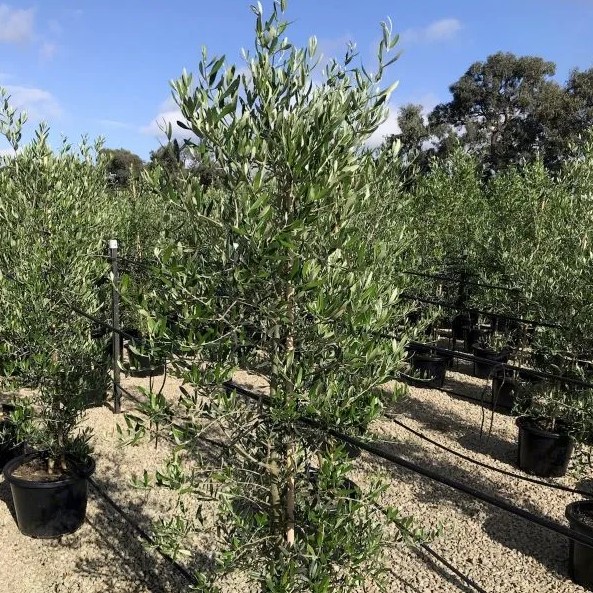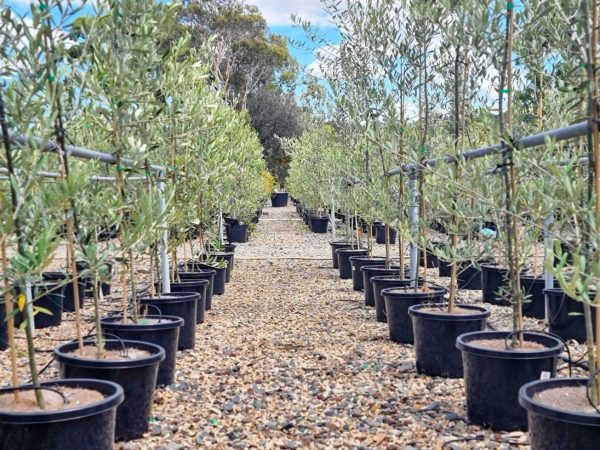
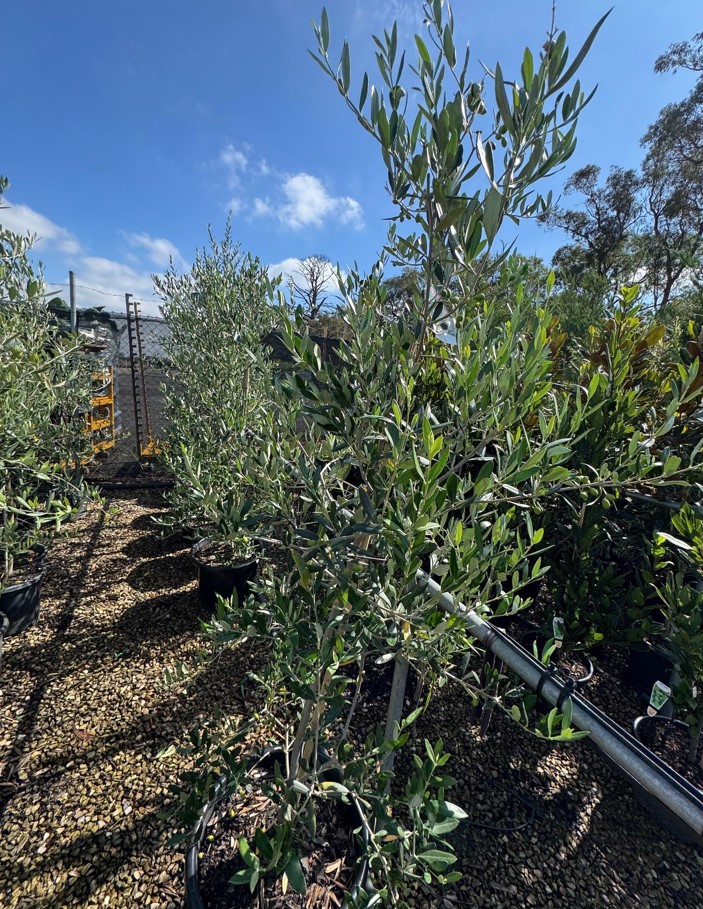
Olea europaea ‘Manzanillo’ is a popular cultivar of the Olive Tree, known for its high-quality olives and its adaptability to various climates. Here’s a detailed look at this variety:
1. Appearance:
- The Manzanillo olive tree is a medium-sized evergreen with a bushy, compact form.
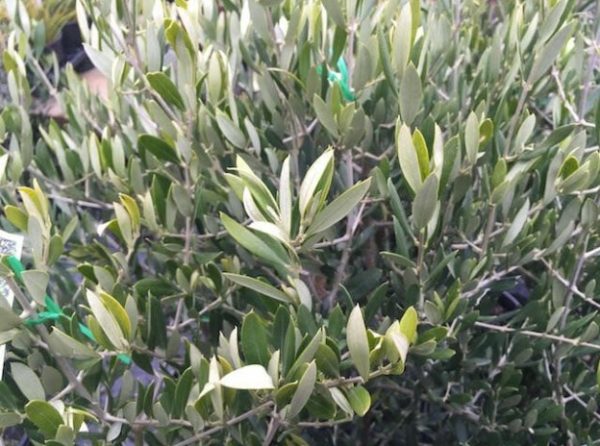
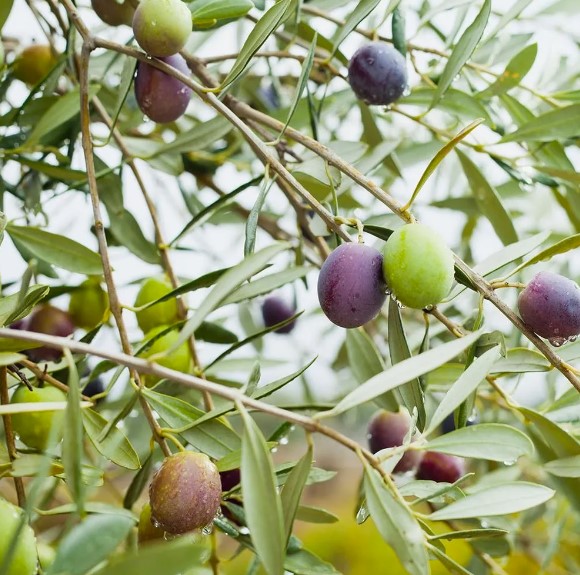
- It has narrow, silvery-green leaves that provide a nice contrast to its dark brown or gray bark.
- Its overall shape is typically rounded and well-structured, with a dense canopy.
2. Size:
- Manzanillo olive trees are usually about 3-5 meters (10-16 feet) tall, although they can grow taller under ideal conditions.
- They have a similar spread, making them suitable for both small gardens and larger landscapes.
- Regular pruning helps maintain a manageable size, especially when grown in pots or smaller spaces.
3. Growth Rate:
- Olive trees are relatively slow-growing but can still reach maturity in 5-10 years.
- Manzanillo olive trees tend to have a moderate growth rate, especially in warm climates, where they thrive.
4. Fruit:
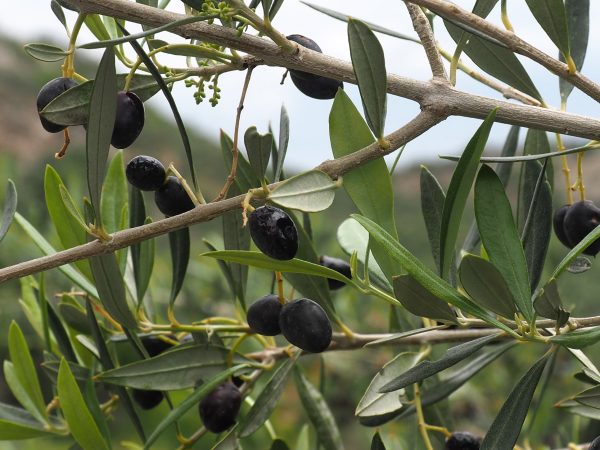
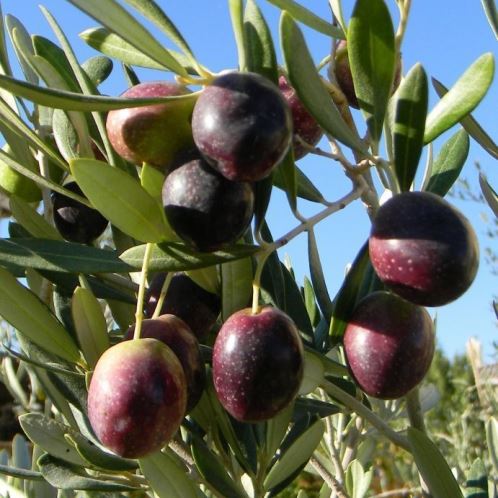
- Manzanillo is well known for producing small, round olives with a distinct, green-to-dark purple color as they ripen.
- This cultivar is highly prized for both table olives (eating olives) and oil production.
- The olives have a rich, slightly bitter flavor and are commonly used in Mediterranean cuisine.
- Olives mature around the fall, and they are typically harvested by hand or by using mechanical harvesting methods.
5. Care:
- Climate: Olive trees thrive in warm, Mediterranean climates with hot, dry summers and mild, wet winters. They are drought-tolerant once established and can tolerate some frost, but they prefer temperatures above freezing.
- Sunlight: Full sun is essential for optimal growth and fruit production. The more sun they receive, the more abundant the olives.
- Soil: Olives prefer well-drained soil, and they are tolerant of poor soil conditions, as long as it’s not too soggy. Slightly alkaline soil is ideal.
- Watering: While they are drought-tolerant, regular watering is important during the establishment period and for fruit production. Afterward, olive trees can thrive with minimal irrigation.
- Pruning: Olive trees benefit from regular pruning to remove dead wood, encourage new growth, and maintain a desirable shape.
6. Uses:
- Manzanillo olives are versatile and used for both eating and oil extraction.
- The small, firm fruit is typically used as table olives and is also an excellent choice for making olive oil.
- Olive trees themselves are commonly used as ornamental trees in landscapes, with their silvery foliage adding texture and contrast.
7. Pests and Diseases:
- While olive trees are relatively pest-resistant, they can be affected by certain pests, such as the olive fruit fly, which can damage the fruit.
- They may also be susceptible to fungal diseases like Verticillium wilt and olive knot (caused by the bacterium Pseudomonas savastanoi), particularly in wetter climates.
- Proper spacing for good air circulation, along with preventive measures and care, can reduce the risk of disease.
8. Special Considerations:
- Manzanillo olive trees are self-pollinating but may benefit from having another olive tree nearby for cross-pollination, which can increase fruit yield.
- They are a great option for those looking to grow their own olives for consumption or for making olive oil in warm, dry climates.
- Although the tree is hardy in many zones, it performs best in USDA hardiness zones 9-11.
Olea europaea ‘Manzanillo’ is a hardy, productive Olive Tree cultivar ideal for Mediterranean-style gardens. Its flavorful olives are perfect for a variety of culinary uses, and the tree itself makes an attractive addition to both residential and commercial landscapes.