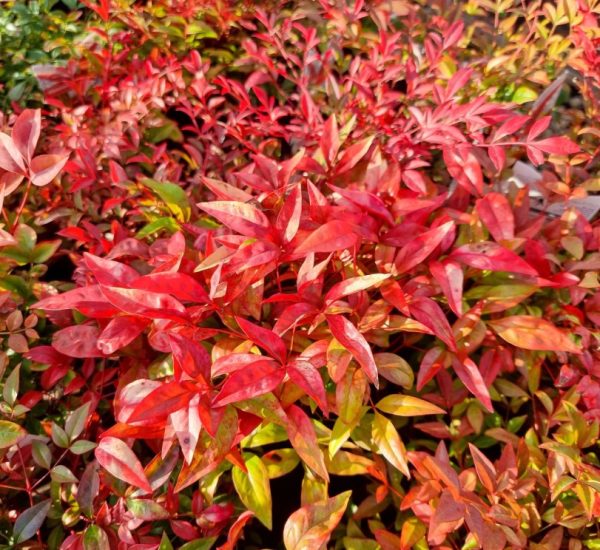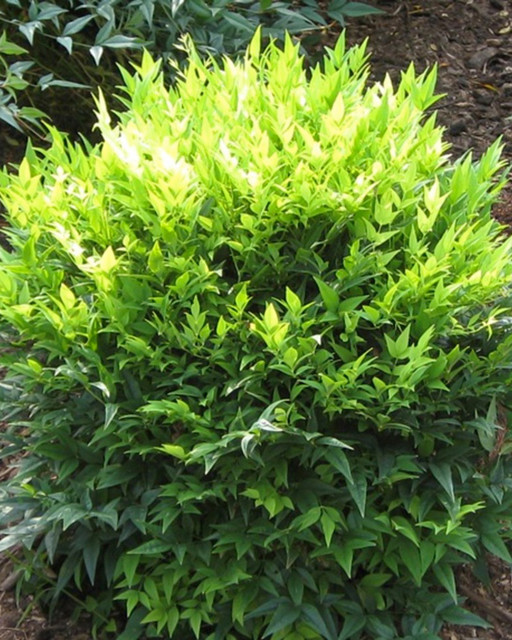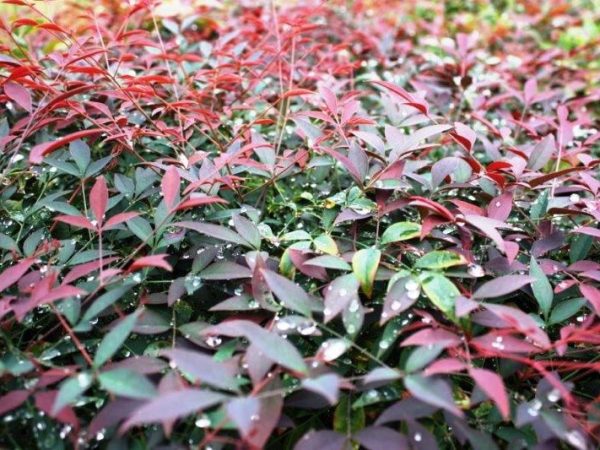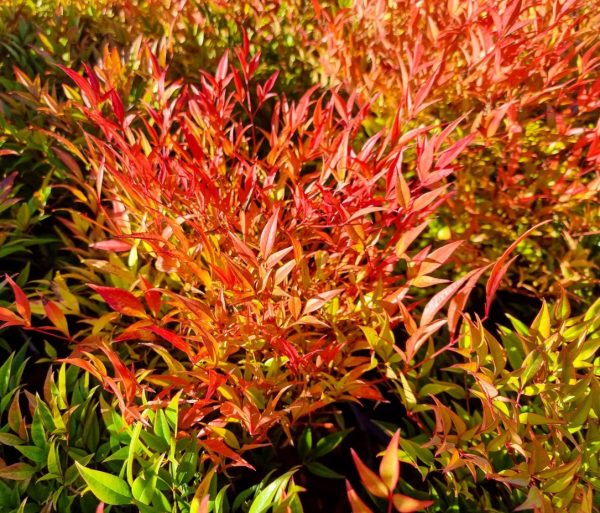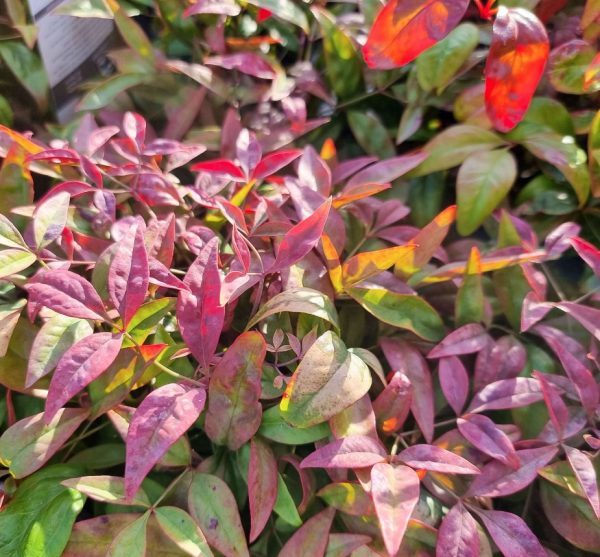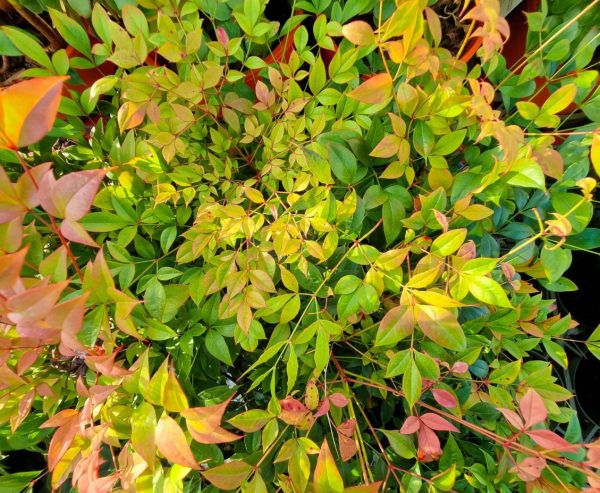
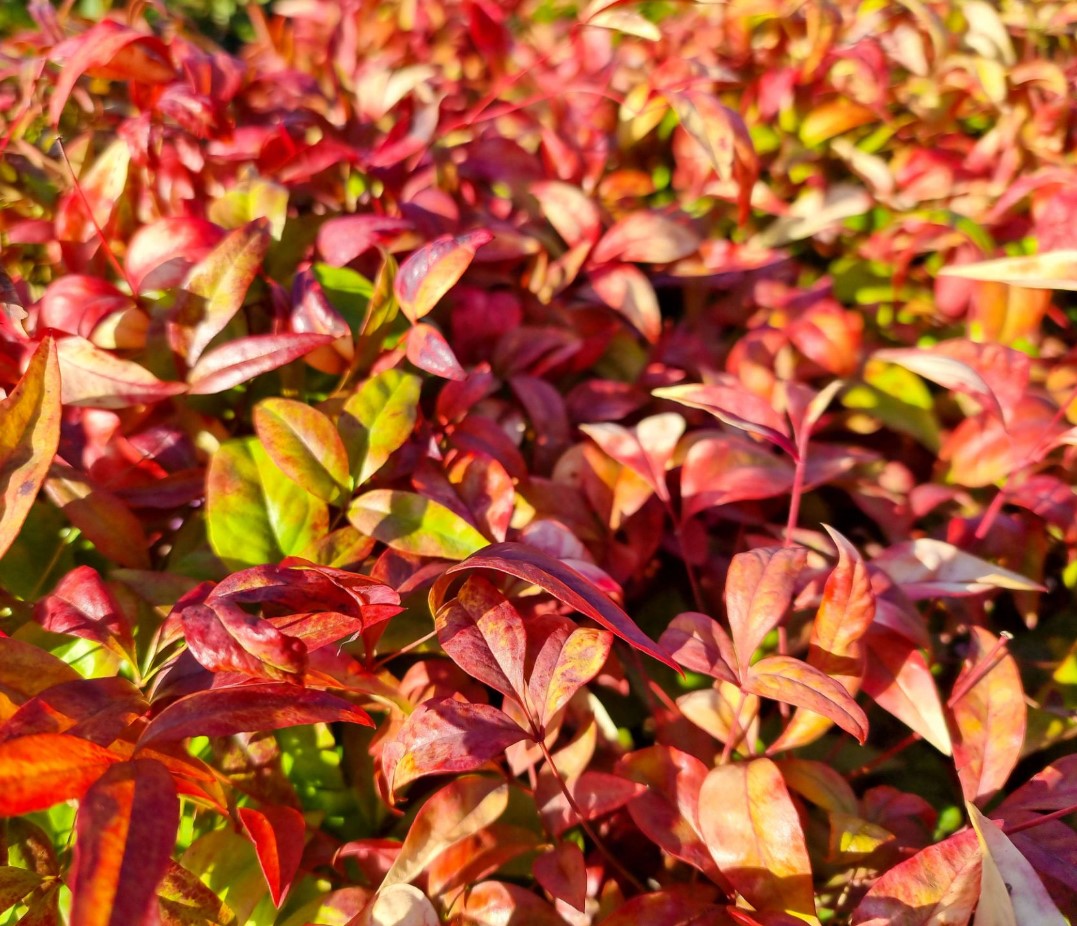
Nandina Dwarf is an evergreen, bun shaped shrub with striking green and red foliage.
Nandina domestica ‘Nana’
(Dwarf Sacred Bamboo)
Nandina domestica ‘Nana’, also known as Dwarf Heavenly Bamboo, is a compact, evergreen to semi-evergreen shrub prized for its color-changing foliage and low-maintenance nature. It is a non-invasive cultivar of Nandina domestica and is popular in ornamental landscapes, especially for its stunning red, orange, and gold foliage in cooler months.
The perfect nandina for borders and edging
- Scientific Name: Nandina domestica ‘Nana’
- Common Names: Dwarf Sacred Bamboo, Dwarf Heavenly Bamboo, Nandina ‘Nana’
- Family: Berberidaceae
- Growth Habit: Compact, dense, mounding shrub
- Height & Spread: Grows up to 12-24 inches (30-60 cm) tall and 18-36 inches (45-90 cm) wide
- Foliage:
- Spring & Summer: Bright green foliage
- Autumn & Winter: Turns vibrant red, orange, and golden hues, especially in colder weather
- Flowers: Small white flowers in late spring to early summer (not as showy as in taller Nandina varieties)
- Fruit: Occasionally produces small red berries, but less frequently than the larger Nandina domestica varieties
Growing Conditions & Care
- Light: Thrives in full sun to partial shade; the best foliage color develops in full sun
- Soil: Prefers well-drained, slightly acidic to neutral soil; tolerates poor and sandy soils
- Watering:
- Drought-tolerant once established but benefits from occasional deep watering
- Avoid waterlogging, as overly wet conditions can lead to root rot
- Temperature & Hardiness:
- In colder climates, it may lose some leaves in winter but regrows in spring
- Humidity: Tolerates humidity well but needs good air circulation to prevent fungal issues
- Maintenance:
- Very low maintenance; requires minimal pruning
- Trim lightly in late winter or early spring to maintain shape if needed
- Slow-growing, so pruning is rarely necessary
Small in stature, big on seasonal colour
- Borders & Edging: Great for defining pathways, driveways, and garden beds
- Ground Cover: Dense, low-growing habit makes it excellent for mass planting
- Containers: Perfect for pots and planters on patios, balconies, and terraces
- Rock Gardens & Xeriscaping: Suitable for dry landscapes due to its drought tolerance
- Japanese & Zen Gardens: Commonly used in Asian-inspired designs
- Understory Planting: Works well beneath taller shrubs or trees
Pests & Diseases
- Resistant to most pests, including deer and rabbits
- Occasionally susceptible to aphids, scale insects, and spider mites, but issues are rare
- Fungal diseases (like leaf spot) can occur in high humidity with poor air circulation
Propagation
- Best propagated through division or softwood cuttings in late spring or early summer
- Slow-growing, so division is the easiest method
Fun Fact
Despite its common name (Heavenly Bamboo), Nandina domestica is not a true bamboo—it belongs to the barberry family (Berberidaceae) and does not spread invasively like bamboo.