
Create a stunning resort-style garden with Giant Bird of Paradise
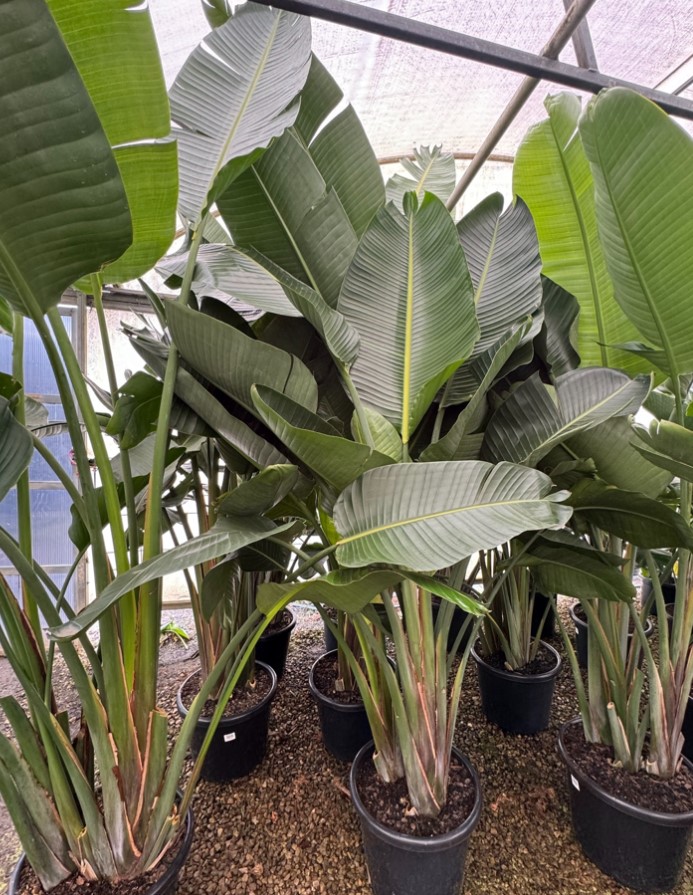
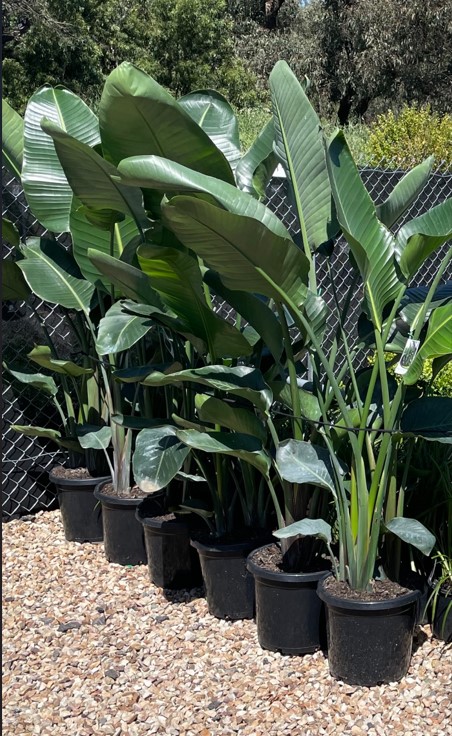
Giant White Bird of Paradise, Strelitzia nicolai, is an impressive Full Sun / Semi Shade Tropical Plant. Huge fan-like leaves create a stunning visual. Grows to 6M
Strelitzia nicolai, commonly known as the Giant Bird of Paradise or White Bird of Paradise, is a dramatic, tropical plant known for its impressive size, lush foliage, and striking white-and-blue flowers. Native to South Africa, this plant is a close relative of the iconic Strelitzia reginae but much larger in scale, making it a popular choice for large gardens or as an indoor statement plant.
Key Features:
Appearance:
- Form: A clumping, tree-like perennial with a multi-stemmed habit and large, banana-like leaves.
- Height and Spread: Reaches 6–10 meters (20–33 feet) tall in outdoor settings, with a spread of 3–4 meters (10–13 feet). Indoors, it generally grows to about 2–3 meters (6–10 feet).
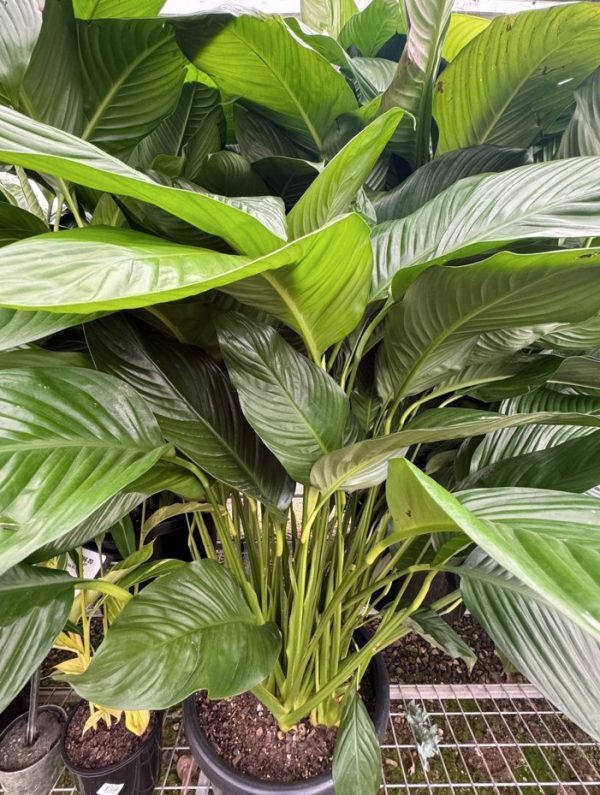
- Foliage: Enormous, glossy, paddle-shaped leaves that can grow up to 2 meters (6 feet) long. The leaves often split in the wind, which is a natural characteristic.
- Flowers: Produces dramatic, bird-like flowers with white petals and a dark blue “beak” structure. These blooms are held on tall stems above the foliage and resemble a crane in flight.
Growing Conditions:
Light Requirements:
- Prefers full sun but tolerates partial shade. Indoors, it needs bright, indirect light or a sunny spot.
Soil:
- Thrives in well-drained, fertile soil with a slightly acidic to neutral pH.
- Improve poor soils by adding organic matter, such as compost or well-rotted manure.
Watering:
- Outdoor Plants: Requires regular watering during the growing season (spring and summer) but prefers the soil to dry slightly between waterings.
- Indoor Plants: Water when the top 2–3 cm (1 inch) of soil feels dry to the touch. Avoid overwatering to prevent root rot.
Hardiness:
- It can tolerate brief periods of light frost but prefers warm, frost-free climates.
- Can survive temperatures as low as -2°C (28°F) but may experience leaf damage in colder weather.
Advantages:
- Impressive Size: Creates a bold and tropical statement in gardens or large indoor spaces.
- Low Maintenance: Once established, it is relatively easy to care for.
- Evergreen Foliage: Provides year-round lush greenery.
- Tropical Flowers: Its bird-like flowers add exotic beauty to outdoor landscapes.
Care Tips:
- Planting: Choose a location with enough space for the plant to spread and grow to its full potential. Protect from strong winds, as the large leaves are prone to splitting.
- Fertilizing: Feed with a balanced fertilizer during the growing season (every 4–6 weeks) to promote healthy growth and flowering.
- Pruning: Remove dead or damaged leaves and spent flowers to maintain a tidy appearance.
- Repotting: For indoor plants, repot every 2–3 years or when it becomes root-bound. Use a slightly larger pot with fresh, well-draining soil.
Uses in Landscaping:
- Specimen Plant: A striking focal point in tropical or subtropical gardens.
- Privacy Screen: Its large leaves and dense growth make it ideal for creating a natural screen or windbreak.
- Poolside Planting: Perfect for adding a tropical vibe around pools and patios.
- Indoor Statement Plant: Makes a dramatic addition to interiors with high ceilings or bright spaces.
Potential Issues:
- Overwatering: Can lead to root rot. Ensure soil has good drainage and avoid waterlogging.
- Leaf Splitting: This is natural due to wind or age and doesn’t harm the plant.
- Pests: May occasionally attract spider mites, scale insects, or mealybugs, especially indoors. Treat infestations with neem oil or insecticidal soap.
- Lack of Blooms: Plants grown indoors or in low light may not flower. To encourage flowering, provide sufficient sunlight and feed regularly.
Companion Plants:
- Tropical Shrubs: Combine with hibiscus, crotons, or bird of paradise (Strelitzia reginae) for a lush, layered look.
- Ferns: Pair with ferns like Blechnum or Asplenium for texture contrast.
- Ground Covers: Add low-growing plants like mondo grass, creeping thyme, or liriope around its base for a polished appearance.
Interesting Facts:
- It is closely related to banana plants (Musa species), which is evident in its similar leaf structure.
- In its native habitat, Strelitzia nicolai is pollinated by birds, specifically sunbirds, which perch on the flowers to access nectar.
- Mature plants grown outdoors in ideal conditions can produce clusters of flowers throughout the year.