
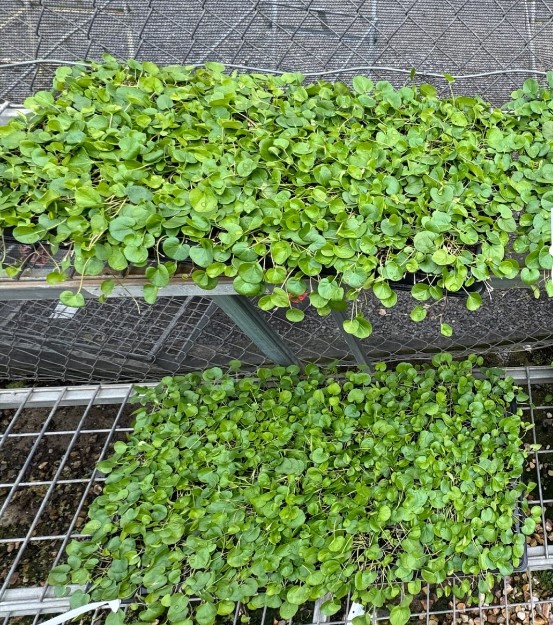
Dichondra repens (Kidney Weed, Lawn Leaf, or Mercury Bay Weed)
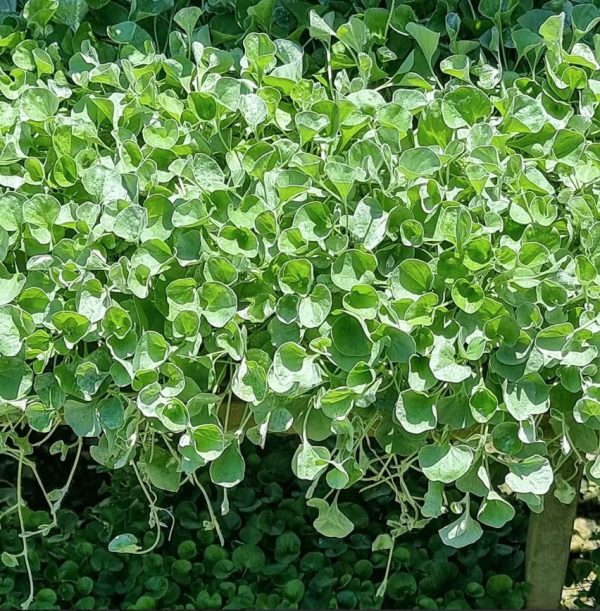
Dichondra repens is a low-growing, creeping ground cover that is often used as a lawn alternative, between pavers, or as an ornamental ground cover. It has small, round, bright green leaves, spreads quickly, and is soft underfoot, making it a popular choice for shaded or moist areas.
Key Features
- Scientific Name: Dichondra repens
- Common Names: Kidney Weed, Lawn Leaf, Mercury Bay Weed
- Family: Convolvulaceae
- Native Range: Australia & New Zealand
- Growth Habit:
- Low-growing, spreading perennial ground cover
- Height: Usually stays 2–5 cm tall
- Spread: Spreads quickly via creeping stems that root at nodes
- Leaves: Small, kidney-shaped, bright green leaves, forming a dense mat
- Flowers:
- Tiny pale green or yellowish flowers, appearing in spring and summer
- Not very noticeable, grown primarily for foliage
- Drought & Frost Tolerance: Moderate; prefers moist soil but can survive short dry spells
- Uses: Lawn alternative, ground cover, between stepping stones, erosion control, hanging baskets
Growing & Care Guide
1. Planting Requirements
✅ Sunlight:
- Grows best in part shade to full sun
- Can tolerate full shade, but growth will be slower
✅ Soil:
- Prefers moist, well-draining soil
- Tolerates sandy, loamy, or clay soils
✅ pH: Slightly acidic to neutral (pH 5.5–7.5)
✅ Location:
- Ideal for lawns, garden beds, between pavers, or under trees
- Works well in hanging baskets and containers
2. Watering & Feeding
💧 Watering:
- Young plants: Keep soil moist but not soggy until established
- Mature plants: Water deeply once or twice a week, more in hot weather
🌱 Fertilization:
- Apply a balanced, low-nitrogen fertilizer every 6–8 weeks during the growing season
- Avoid over-fertilizing, as it may lead to excessive growth and maintenance
3. Fill spaces beautifully with living greenery
✂️ Mowing & Pruning:
- If grown as a lawn alternative, mow occasionally to maintain a uniform height
- Trim runners if they spread into unwanted areas
🌿 Mulching:
- Use organic mulch around new plantings to retain moisture and suppress weeds
4. Pests & Diseases
🐜 Pest Resistance:
- Generally pest-free, but may occasionally attract aphids or slugs
- If needed, treat with horticultural soap or organic pest control
🦠 Disease Resistance:
- Can be susceptible to root rot if grown in poorly drained soils
- Fungal diseases (such as leaf spot) may occur in humid conditions—ensure good airflow
5. Propagation
🌱 Easily propagated by division or cuttings:
- Cuttings: Take small pieces of creeping stems and plant them in moist soil
- Division: Can be divided into sections and replanted in spring/summer
- Self-spreading: Roots form along the runners naturally, making it easy to establish
6. The low-maintenance lawn alternative you’ll love
✅ Lawn Alternative: Soft, lush, and low-maintenance replacement for grass
✅ Between Pavers & Stepping Stones: Creeping habit fills gaps beautifully
✅ Erosion Control: Stabilizes slopes and prevents soil erosion
✅ Under Trees & Shady Areas: Grows well where grass struggles
✅ Hanging Baskets & Pots: Trailing stems provide a lush, cascading effect
Why Grow Dichondra repens?
- Low-maintenance & soft underfoot – great for barefoot walking.
- Drought-tolerant once established – needs less water than traditional lawns.
- No mowing required – if used as a ground cover.
- Grows in shade or sun – versatile for many garden conditions.
- Attractive, dense green foliage – adds beauty to landscapes.