Chilean Guava
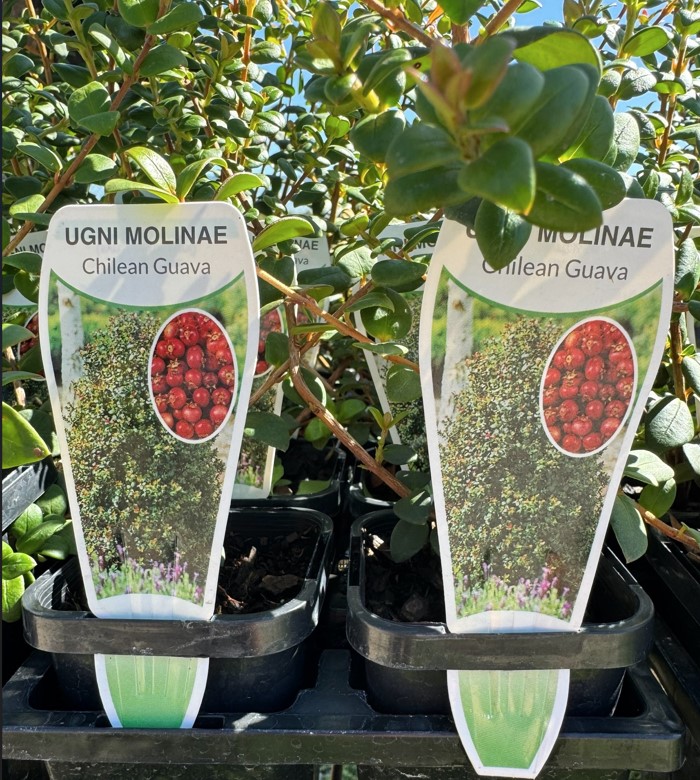
Ugni molinae, commonly known as Chilean guava or Tazziberry, is a small, evergreen shrub prized for its fragrant flowers and delicious, aromatic berries. Native to Chile and Argentina, it was reportedly a favorite fruit of Queen Victoria.
Quick Facts About Ugni molinae
- Common Names: Chilean guava, Tazziberry, Strawberry myrtle
- Botanical Family: Myrtaceae (same family as guava and eucalyptus)
- Plant Type: Evergreen shrub
- Hardiness: Can tolerate mild frosts but benefits from protection in colder climates
- Sun Exposure: Full sun to partial shade
- Soil Requirements: Well-draining, slightly acidic soil; tolerates sandy and loamy soils
- Watering Needs: Moderate; prefers consistent moisture but not waterlogged conditions
- Height & Spread: Typically 3–6 feet tall and wide, but can be pruned smaller
- Flowers: Small, bell-shaped, white to pale pink, and fragrant
- Fruit: Small, deep red to purple berries with a sweet, aromatic, strawberry-like flavor
- Bloom Time: Spring to early summer
- Harvest Time: Late summer to autumn
- Attracts: Bees and pollinators
- Deer & Rabbit Resistance: Generally resistant
Growing & Care Tips
- Mulching: Helps retain moisture and protect roots from extreme temperatures.
- Pruning: Can be shaped and pruned to maintain size; prune after fruiting.
- Fertilizing: Benefits from a light application of organic fertilizer in spring.
- Winter Protection: In colder zones, grow in containers and move indoors during frosty periods.
Uses of Ugni molinae
- Culinary: The berries can be eaten fresh, used in jams, desserts, or even infused into drinks.
- Ornamental: Makes a great hedge, container plant, or edible landscape addition.
- Medicinal & Traditional Uses: Historically used for its antioxidant properties.