
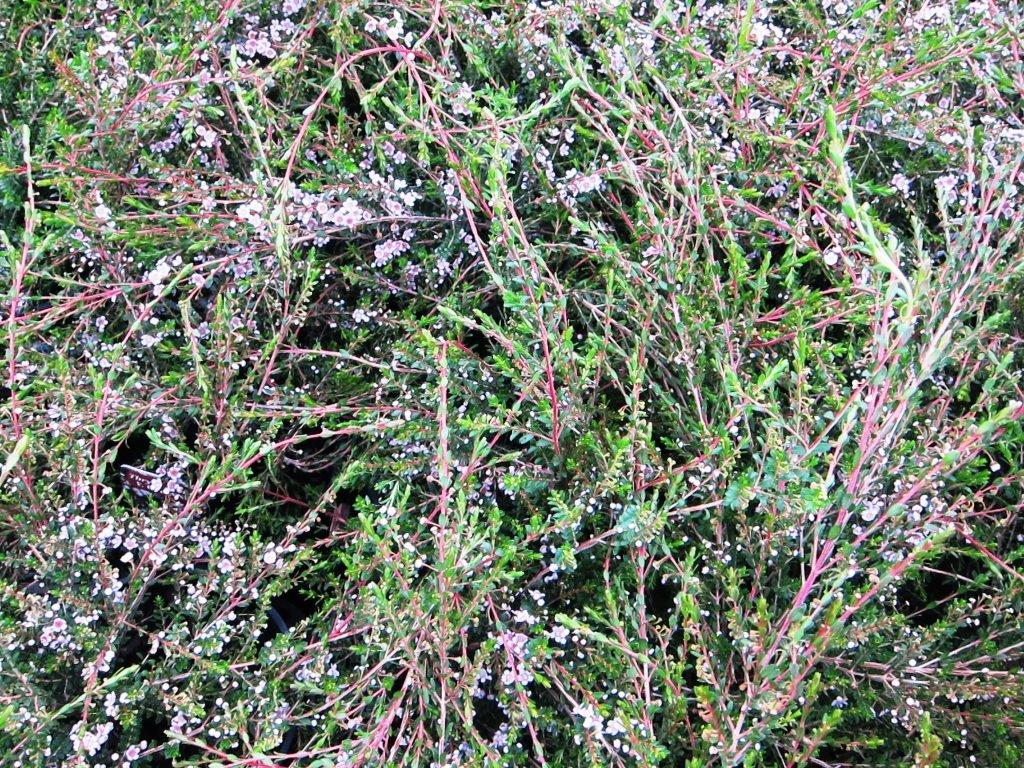
Thryptomene is a genus of evergreen shrubs in the Myrtaceae family, native to Australia. These plants are well-loved for their delicate, small, pink to white flowers that bloom profusely, often covering the plant in a soft cloud of color. Thryptomene species are excellent choices for native gardens, rockeries, and low-maintenance landscapes.
Key Features of Thryptomene:
- Scientific Name: Thryptomene spp.
- Common Name: Thryptomene
- Family: Myrtaceae
- Origin: Australia
- Growth Habit:
- Generally small to medium-sized shrubs, reaching 0.5–2 meters (1.5–6.5 feet) in height.
- Arching or bushy growth with fine-textured foliage.
Foliage & Flowers:
- Leaves:
- Small, narrow, and aromatic when crushed.
- Often dark green with a slight sheen.
- Flowers:
- Tiny, star-shaped, usually pink or white.
- Blooms in abundance from late winter to spring.
- Attracts bees, butterflies, and other pollinators.
Growing Conditions:
- Sunlight: Prefers full sun to partial shade.
- Soil: Well-drained, sandy or loamy soil; adapts to poor soils.
- Watering: Drought-tolerant once established; occasional watering in dry periods.
- Frost Tolerance: Moderate frost resistance.
- Maintenance:
- Low-maintenance; responds well to light pruning after flowering to encourage bushier growth.
- Avoid over-watering or heavy, poorly drained soils.
Popular Species:
- Thryptomene calycina – Larger flowers, more upright habit.
- Thryptomene saxicola – One of the most widely grown species, ideal for rockeries and low hedging.
- Thryptomene denticulata – Profuse flowering and fine foliage.
Landscaping Uses for Thryptomene:
- Garden borders and rockeries
- Low hedging or screening
- Cut flowers and floral arrangements
- Attracting pollinators for biodiversity gardens
This plant is a fantastic, easy-care shrub that brings long-lasting color and texture to a garden.