
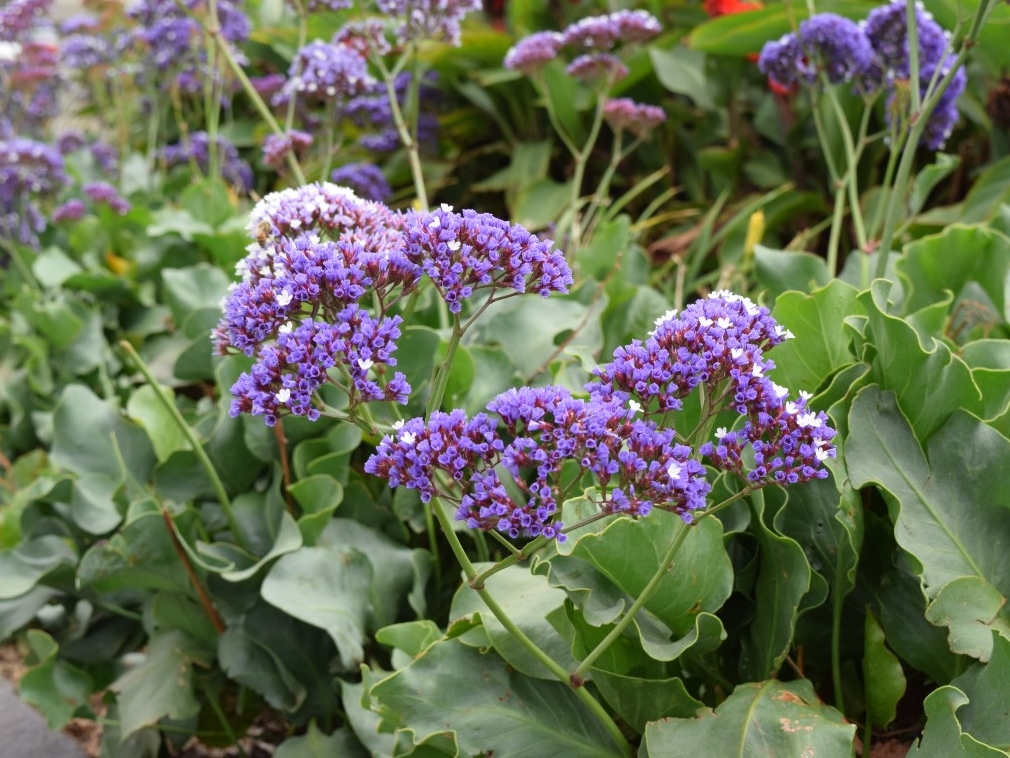
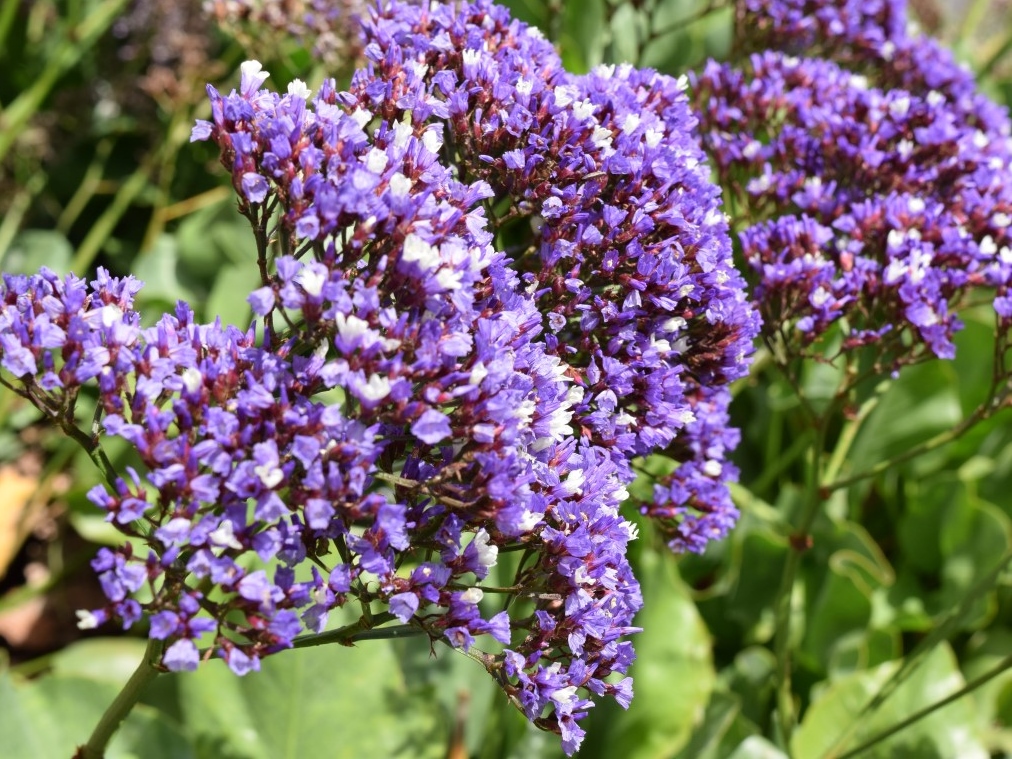
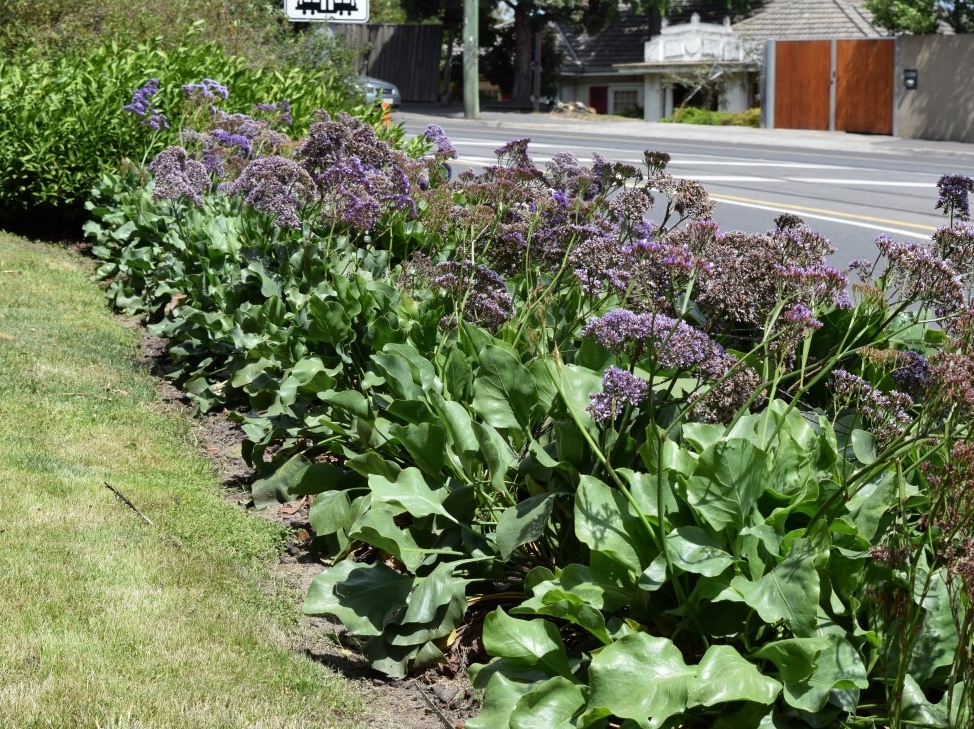
The Sea Lavender is a glossy green leaved perennial which tolerates direct salt spray and harsh conditions.
Limonium perezii, commonly known as Sea Lavender, Statice, or Perez’s Sea Lavender, is a hardy, low-maintenance perennial valued for its vibrant, long-lasting flowers and tolerance to challenging conditions. Here’s a detailed guide:
Description
- Foliage:
- Thick, leathery, dark green leaves that form a low, basal rosette.
- Leaves are slightly wavy and provide a lush, textured appearance.
- Flowers:
- Clusters of tiny, papery flowers in vibrant purple or lavender with small white centers.
- Flower stalks rise well above the foliage, reaching 1–2 feet (30–60 cm) tall.
- Blooms appear in late spring through summer, often lasting well into fall.
- Growth Habit:
- A clump-forming perennial that grows about 12–24 inches (30–60 cm) tall and wide.
Habitat and Growth
- Native Range: Coastal areas of the Canary Islands.
- Light: Thrives in full sun but can tolerate partial shade, especially in hotter climates.
- Soil: Prefers well-drained, sandy, or loamy soil. Tolerant of poor soil and saline conditions, making it ideal for coastal gardens.
- Hardiness: In cooler zones, it may be grown as an annual.
- Drought Tolerance: Extremely drought-tolerant once established, making it a perfect choice for water-wise gardens.
Uses
- Ornamental:
- Ideal for coastal, Mediterranean, and xeriscape gardens.
- Adds texture and color to mixed borders, rock gardens, or mass plantings.
- Cut Flowers:
- The papery flowers are long-lasting in fresh arrangements.
- Excellent as dried flowers, retaining their color for months.
- Erosion Control:
- The plant’s hardy root system helps stabilize soil in sandy or rocky areas.
- Wildlife Garden:
- Attracts pollinators like bees and butterflies while being deer-resistant.
Care Tips
- Watering:
- Water regularly during the first year to establish roots.
- Once established, water sparingly; it thrives in dry conditions.
- Fertilizing:
- Generally not necessary, but a light application of balanced fertilizer in spring can encourage growth in poor soils.
- Pruning:
- Remove spent flower stalks to promote a tidy appearance and potential reblooming.
- Cut back foliage in late fall or early spring to encourage fresh growth.
- Pests/Diseases:
- Generally pest-free and disease-resistant. Overwatering can lead to root rot.
Benefits
- Low Maintenance: Requires minimal care, making it perfect for low-effort gardens.
- Drought and Salt Tolerance: Ideal for arid regions and coastal areas where other plants may struggle.
- Long-Lasting Flowers: Both fresh and dried blooms provide extended beauty.
Fun Facts
- Papery Texture: The flowers’ papery bracts give them a unique texture, making them ideal for dried arrangements.
- Coastal Preference: Its tolerance for salty air and soil makes it a staple in seaside landscapes.
- Name Origin: The genus Limonium comes from the Greek word “leimon,” meaning meadow.