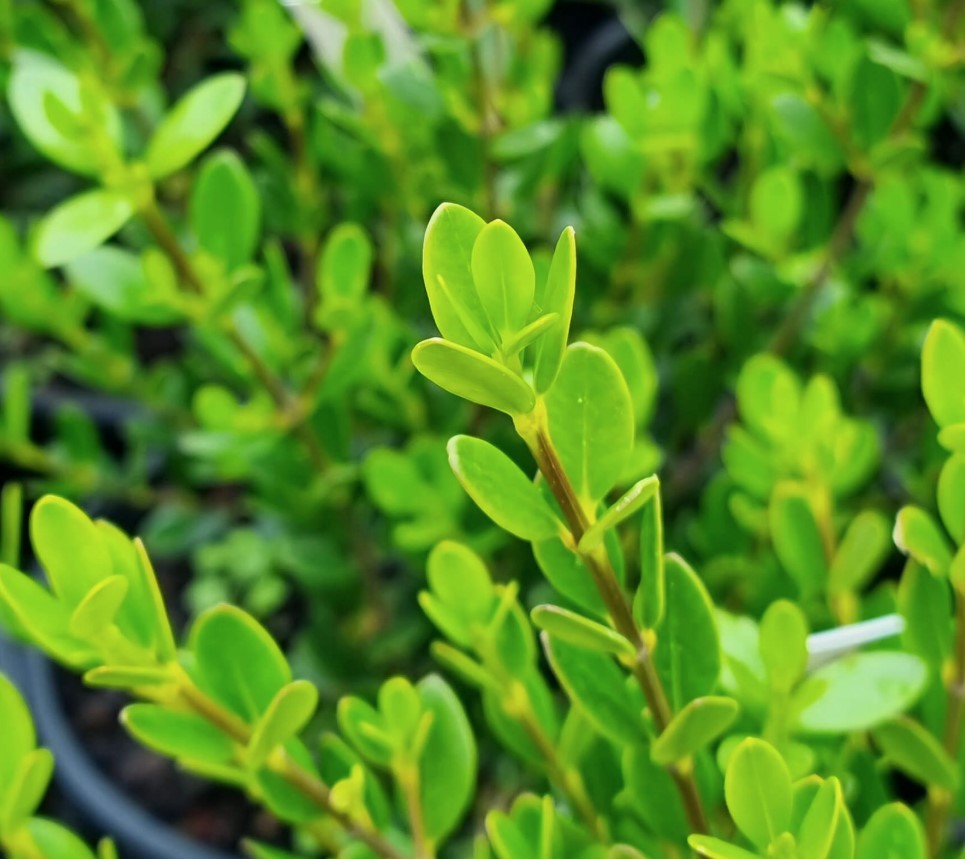
Alyxia buxifolia, commonly called Sea Box, is a tough, evergreen shrub native to southern coastal regions of Australia. It typically grows as a compact, mounding plant around 1 to 3 metres tall, though it often stays lower in windy areas. Its thick, leathery green leaves and fragrant, star-shaped white flowers make it a striking addition to gardens. These flowers appear from spring to late summer, followed by small, bright orange-red fruits that attract birds but are toxic to humans.
Thriving in sandy or loamy soils, Sea Box is well adapted to harsh coastal conditions, tolerating salt spray, drought, and light frost. It’s a valuable plant for coastal landscaping, used for hedging, habitat creation, and erosion control. Low-maintenance and resilient, it supports local wildlife by providing shelter and nectar for birds, insects, and small animals. Traditionally, the bark of Sea Box was used by Indigenous Australians for treating dysentery, and the plant contains several bioactive compounds of interest in medicinal research.