
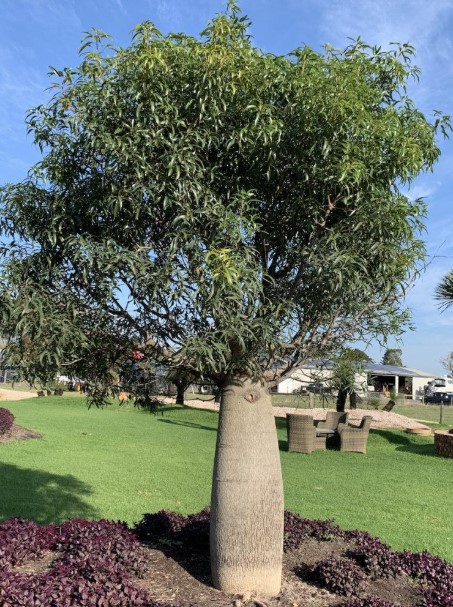
Brachychiton rupestris – The Queensland Bottle Tree
Scientific Name: Brachychiton rupestris
Common Names: Queensland Bottle Tree, Narrow-leaved Bottle Tree
Family: Malvaceae (formerly Sterculiaceae)
Origin: Eastern Australia (Queensland and New South Wales)
Description:
- Growth Habit: A deciduous to semi-evergreen tree that can reach 10-20 meters (33-66 feet) in height.
- Trunk: Characteristic swollen, bottle-shaped trunk, which can grow up to 2-3 meters (6.5-10 feet) in diameter, used for water storage.
- Leaves: Long and narrow when mature; young leaves may be more deeply lobed.
- Flowers: Small, bell-shaped, creamy-yellow with red markings, appearing in spring or early summer.
- Fruit: Hard, woody seed pods containing numerous seeds surrounded by irritating hairs.
Growing Conditions:
- Climate: Prefers warm, dry climates but can tolerate mild frost.
- Soil: Adaptable to a range of soils but thrives in well-draining, sandy, or loamy soils.
- Sunlight: Full sun is ideal for optimal growth.
- Watering: Drought-tolerant once established; moderate watering in the first few years helps with establishment.
- Growth Rate: Slow to moderate.
Uses and Benefits:
- Ornamental Tree: Popular in parks, gardens, and streetscapes due to its unique trunk and drought tolerance.
- Indigenous Uses: Australian Aboriginal people historically used the tree for food, fiber, and water storage.
- Wildlife Habitat: Provides food and shelter for birds and insects.
- Soil Erosion Control: Its deep root system helps stabilize soil in dry regions.