
Germander
Teucrium fruticans – Evergreen Silver Shrub for Hedging and Mediterranean Gardens
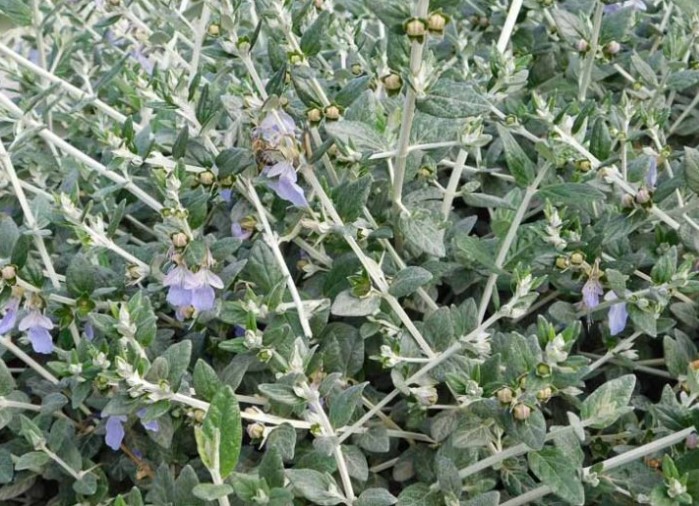
Teucrium fruticans, commonly known as Bush Germander, is a hardy evergreen shrub prized for its striking silvery-grey foliage and masses of soft lavender-blue flowers. Its naturally rounded habit, drought tolerance and ability to thrive in challenging conditions make it an outstanding choice for hedging, borders, coastal gardens and Mediterranean-inspired landscapes. Flowering from late winter through spring, and often again during warmer months, it provides long-lasting colour while attracting bees and other beneficial pollinators.
Ideal for Melbourne gardens and landscapes across Victoria, Teucrium fruticans performs exceptionally well in full sun and well-drained soils. It tolerates drought, wind, coastal exposure and regular pruning, making it perfect for low-maintenance gardens and formal clipped hedges alike.
Features
| Feature | Details |
|---|---|
| Botanical Name | Teucrium fruticans |
| Common Name | Bush Germander |
| Plant Type | Evergreen shrub |
| Flower Colour | Lavender-blue |
| Foliage Colour | Silvery-grey |
| Mature Height | 1.5–2.5m |
| Mature Width | 1.5–2.5m |
| Position | Full sun |
| Growth Rate | Moderate to fast |
| Best Uses | Hedging, screening, coastal gardens, Mediterranean gardens, feature planting and borders |
Why You’ll Love Teucrium fruticans
| Benefit | Why It Matters |
|---|---|
| Attractive silver foliage | Provides year-round colour and texture |
| Beautiful blue flowers | Delivers seasonal colour and attracts pollinators |
| Drought tolerant | Ideal for water-wise landscapes once established |
| Excellent for hedging | Clips beautifully into formal or informal shapes |
| Coastal and wind tolerant | Performs well in exposed garden locations |
| Low maintenance | Requires minimal care while maintaining a tidy appearance |
Bring year-round elegance to your garden with Teucrium fruticans, a versatile evergreen shrub that combines beautiful silver foliage, delicate blue flowers and exceptional drought tolerance for modern Australian landscapes.