
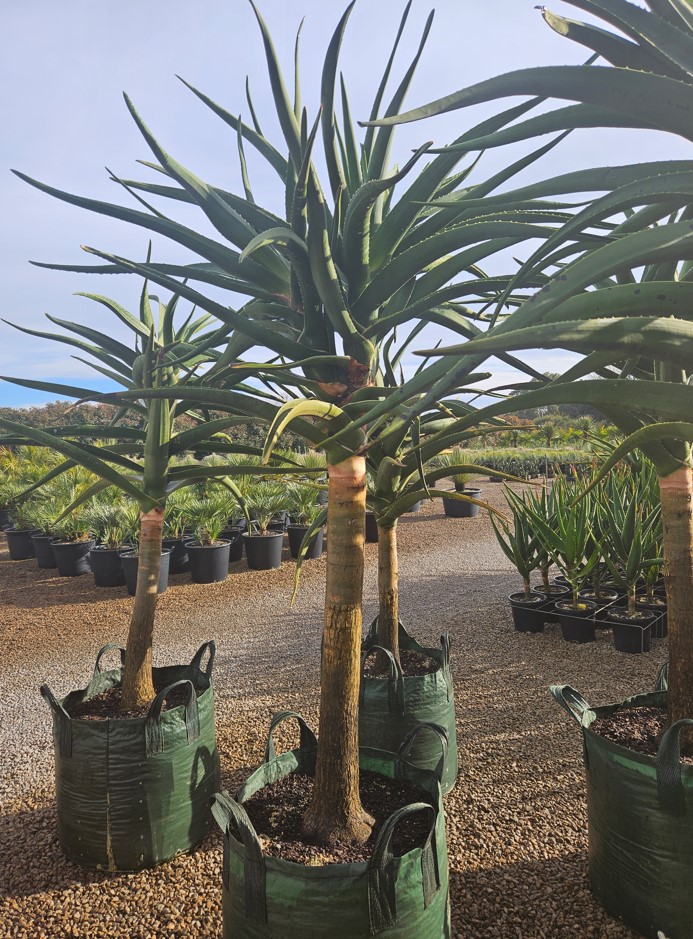
Tree Aloe, Aloidendron barberae is slow growing & largest of the Aloe species. Multi-branched crown. Soft-tipped long, fleshy arching green leaves. Spectacular African native. Soft pink flowers. Grows to 10M
Pictured: 200L
Aloidendron barberae (formerly Aloe barberae), commonly known as the tree aloe, is the largest tree-forming species of aloe. It is native to parts of South Africa, Eswatini (Swaziland), and Mozambique, where it grows in dry forests and rocky areas.
Key Characteristics:
- Family: Asphodelaceae
- Height: Can grow up to 15 meters (49 feet) tall, making it the tallest aloe species.
- Stem: Thick, woody, and branching trunk with a greyish-brown bark.
- Leaves: Long, slender, and slightly recurved, with dark green coloration and serrated edges.
- Flowers: Tubular, pinkish-orange to salmon-colored, blooming in winter (typically between May and July in the Southern Hemisphere).
- Growth Rate: Slow-growing but long-lived.
Uses & Benefits:
- Ornamental: Popular in gardens and landscaping due to its striking appearance.
- Drought Tolerance: Requires minimal water, making it ideal for xeriscaping.
- Wildlife Attraction: Flowers attract bees, butterflies, and sunbirds.
- Soil Stabilization: Helps prevent erosion in arid environments.
Cultivation & Care:
- Climate: Prefers warm, dry conditions but can tolerate mild frost.
- Sunlight: Full sun is best for optimal growth.
- Soil: Well-drained sandy or rocky soils; does not tolerate waterlogging.
- Watering: Very drought-resistant; occasional deep watering in prolonged dry spells.
- Propagation: Grown from cuttings or seeds; cuttings should be left to dry for a few days before planting to prevent rot.
Interesting Facts:
- It was previously classified under Aloe but later reclassified as Aloidendron due to its tree-like growth form.
- In cultivation, it is often used as a statement plant in arid or Mediterranean-style gardens.