
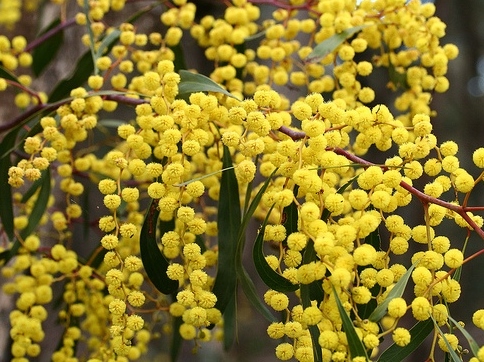
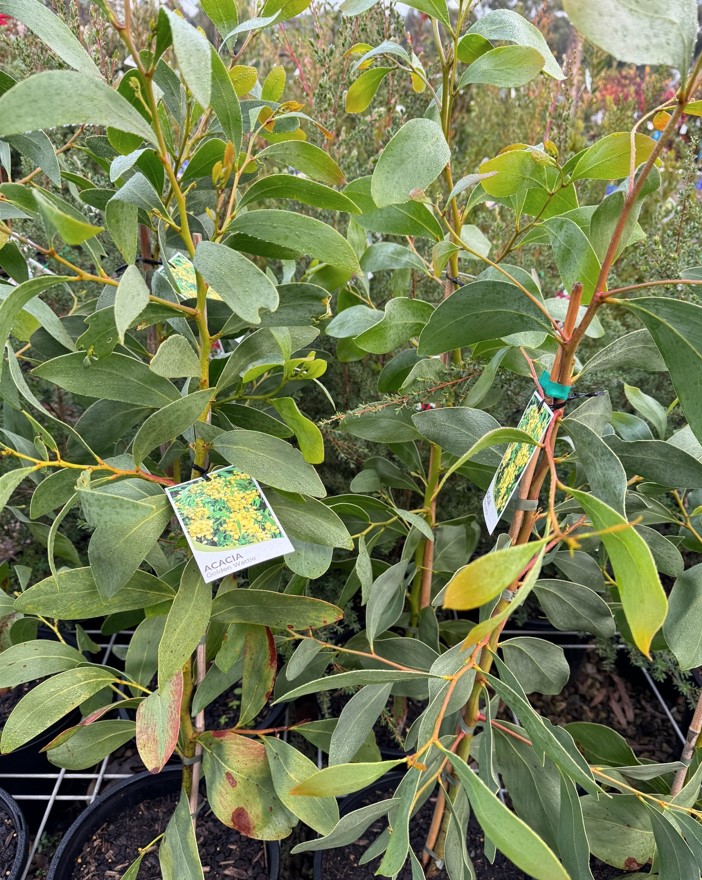
The Golden Wattle Acacia pycnantha prefers full sun to part shade in well drained soil.
Acacia pycnantha, commonly known as the golden wattle, is a species of flowering plant in the legume family (Fabaceae) native to Australia. It is widely recognized as Australia’s national floral emblem.
Here are some key features of Acacia pycnantha Golden Wattle:
- Appearance: It is a shrub or small tree, typically growing to a height of 2 to 8 meters. The plant has fern-like leaves (called phyllodes), which are modified stems rather than true leaves.
- Flowers: The golden wattle is known for its bright yellow, ball-shaped clusters of flowers that bloom in late winter or early spring. The flowers have a distinct, sweet fragrance.
- Habitat: It is native to southeastern Australia and grows in a variety of habitats, including woodlands and open forests. It thrives in well-drained, sunny locations.
- Ecological Role: Like other Acacia species, it plays a role in nitrogen fixation, enriching the soil with this essential nutrient.
- Cultural Significance: The golden wattle is important in Australian culture and has been a symbol of national identity. It is celebrated annually on Wattle Day (September 1st).
- Uses: The is used for ornamental purposes in landscaping and for its timber. The seeds are sometimes utilized in food products, and the bark has been used in traditional medicine.