
Cascading burgundy foliage with timeless elegance
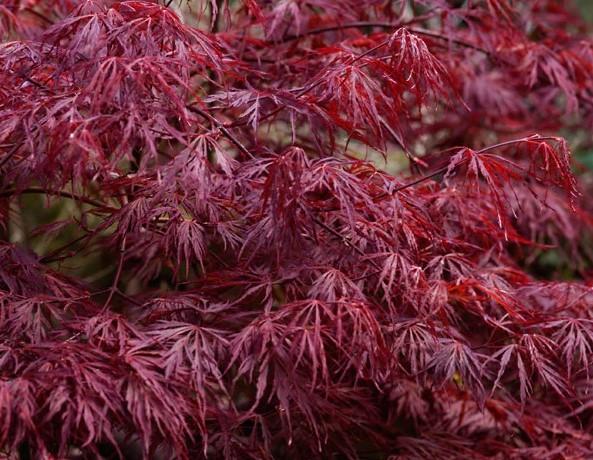
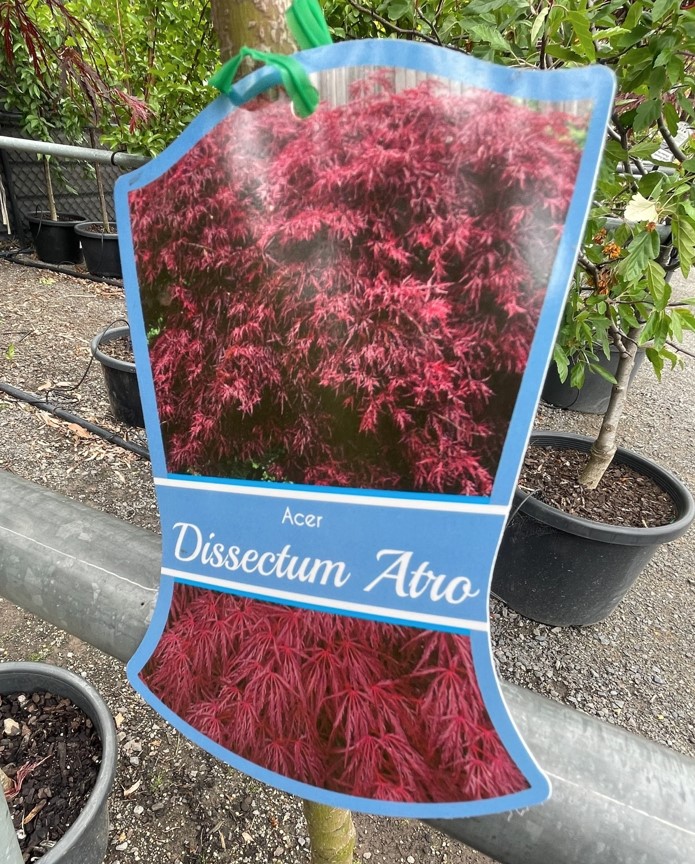
Acer palmatum ‘Dissectum Atropurpureum,’ commonly known as the Japanese Laceleaf Maple, is a stunning deciduous tree prized for its finely dissected, deeply lobed leaves and rich, red-purple coloration. This cultivar is a classic choice for ornamental gardens, adding elegance and texture to any landscape.
Key Features:
Appearance:
- Form: A graceful, low-growing tree with a mounding, cascading habit. Its weeping branches create a rounded, dome-like shape, making it a focal point in the garden.
- Height and Spread: Typically grows 2–3 meters (6–10 feet) tall and wide, though it can vary depending on pruning and growing conditions.
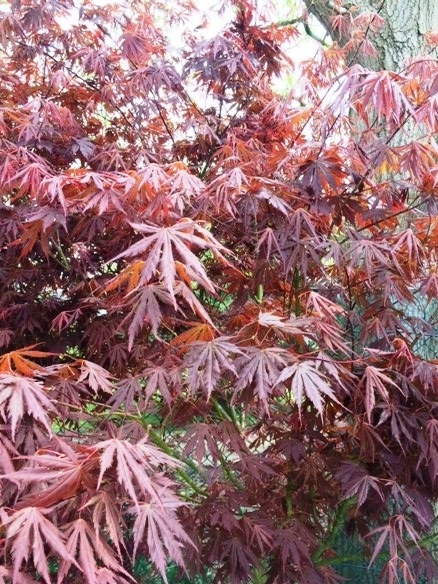
- Leaves: The deeply dissected, feathery leaves are a vibrant red-purple during the spring and summer. In Autumn, the foliage intensifies to brilliant shades of crimson and orange.
- Bark: Smooth bark adds winter interest, especially in mature specimens.
Flowers and Fruits:
- Produces small, inconspicuous purple-red flowers in spring, followed by winged samaras (seeds) in late summer.
Growing Conditions:
Light Requirements:
- Prefers partial shade, especially in hotter climates, to protect the delicate foliage from scorching. In cooler climates, it can tolerate more full sun.
Soil:
- Thrives in well-drained, slightly acidic, and organically rich soils. Avoid heavy clay or waterlogged soils.
Watering:
- Requires consistent moisture, especially during hot and dry periods. Mulch around the base to retain soil moisture and regulate temperature.
Advantages:
- Ornamental Beauty: Its cascading, intricate foliage and stunning color make it a standout specimen.
- Compact Size: Perfect for smaller gardens, containers, or as a centerpiece in landscaping.
- Seasonal Interest: Offers year-round beauty with its vivid foliage, graceful shape, and winter bark texture.
- Low Maintenance: Requires little pruning to maintain its shape, though occasional thinning may be beneficial.
Care Tips:
- Location: Plant in a sheltered spot to protect it from strong winds, which can damage the delicate leaves.
- Mulching: Add a 5–7 cm (2–3 inch) layer of mulch to conserve moisture and protect the roots.
- Pruning: Prune sparingly in late winter or early spring to remove dead or crossing branches and maintain its natural shape.
- Fertilizer: Apply a slow-release fertilizer formulated for acid-loving plants in early spring.
A living work of art for your garden
- Specimen Tree: Ideal as a focal point in gardens, courtyards, or beside water features.
- Japanese-Style Gardens: Fits perfectly in Zen or Asian-inspired landscapes.
- Containers: Its compact size makes it suitable for pots or large planters.
- Mixed Borders: Weeping Japanese Maple pairs well with evergreen shrubs, contrasting perennials, or ferns.