
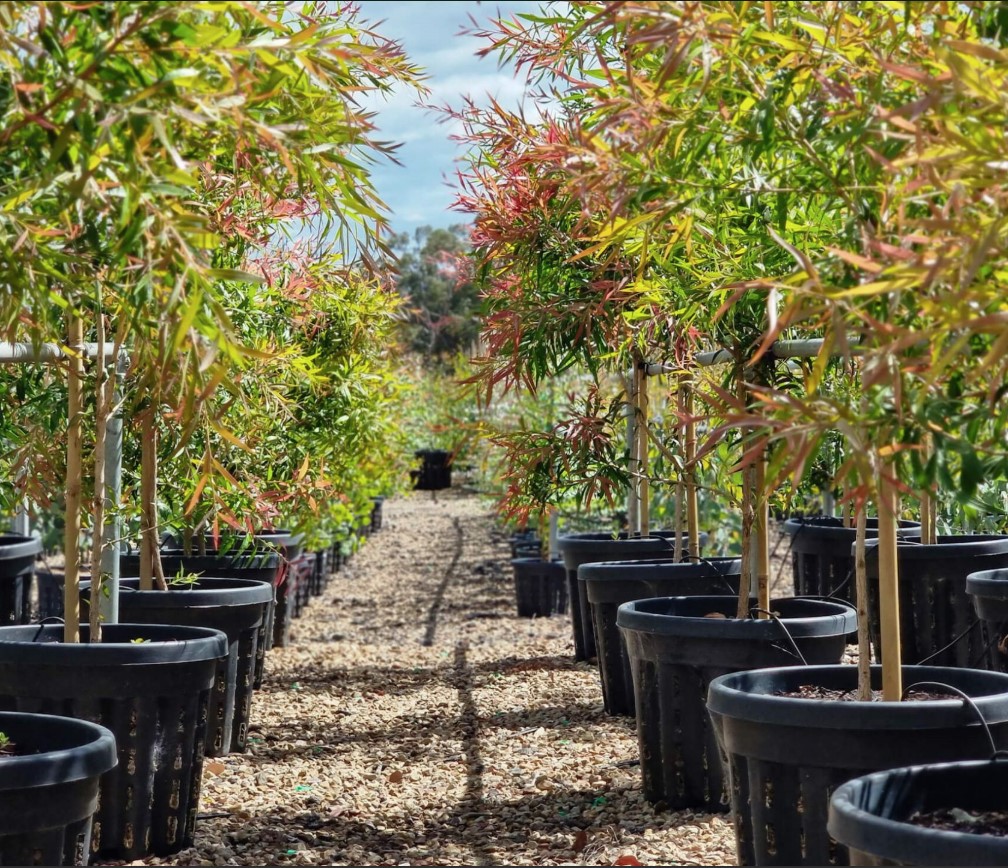
Callistemon salignus, commonly known as the Willow Bottlebrush, is a species of flowering plant in the family Myrtaceae, native to Australia. It is well known for its distinctive bottlebrush-shaped flowers, which are typically pale yellow or creamy white, though some specimens may have pinkish tones.
Key Features:
- Scientific Name: Callistemon salignus (sometimes classified as Melaleuca saligna)
- Common Name: Willow Bottlebrush
- Family: Myrtaceae
- Native Range: Eastern Australia (Queensland, New South Wales, Victoria)
- Growth Habit: Small to medium-sized tree, often multi-stemmed, growing up to 8–15 meters in height.
- Leaves: Narrow, lance-shaped (similar to willow leaves), soft-textured, and slightly drooping.
- Flowers: Cylindrical spikes of creamy yellow or pale greenish-white flowers, appearing mainly in spring to summer.
- Bark: Often papery and peeling, giving the trunk a characteristic textured look.
- Habitat: Found in moist areas, along riverbanks, and in wet woodlands.
- Drought & Frost Tolerance: Moderately tolerant; prefers moist conditions but can adapt to drier environments.
- Uses:
- Popular in landscaping for its ornamental value.
- Attracts bees, birds, and other pollinators.
- Sometimes used in erosion control along waterways.
- Timber can be used for woodworking and small craft projects.
Growing & Caring for Callistemon salignus (Willow Bottlebrush)
The Willow Bottlebrush (Callistemon salignus) is a hardy and attractive plant that thrives in various conditions. Below is a detailed guide on how to grow and maintain it successfully in your garden.
1. Planting Requirements
Climate & Location
- Suited to warm to temperate climates.
- Tolerates mild frost and moderate drought once established.
- Best grown in full sun to partial shade (flowers best in full sun).
Soil Preferences
- Prefers moist, well-draining soil.
- Tolerates sandy, loamy, or clay soils but thrives in slightly acidic to neutral pH.
- Adapts well to boggy or wet areas, making it ideal for water gardens or riverbanks.
2. Watering & Feeding
Watering
- Young plants: Require regular watering to establish strong roots.
- Mature plants: Drought-tolerant but benefit from deep watering in extended dry periods.
- Thrives in wet areas but should not sit in waterlogged soil.
Fertilizing
- Apply a low-phosphorus fertilizer in spring and autumn to promote growth and flowering.
- A mulch layer around the base retains moisture and enriches soil nutrients.
3. Pruning & Maintenance
Pruning
- Light pruning after flowering encourages new growth and a compact shape.
- Remove dead or diseased branches as needed.
- Can be pruned into a hedge or small tree form.
Mulching
- Apply organic mulch (e.g., bark or compost) around the base to conserve moisture and suppress weeds.
4. Pest & Disease Control
- Generally pest-resistant, but watch for scale insects or psyllids (treat with insecticidal soap if necessary).
- Root rot can occur in excessively wet, poorly draining soil.
5. Propagation
- Grows from seeds (collected from mature seed capsules) or cuttings.
- Seed propagation takes longer but is effective.
- Cuttings (semi-hardwood) taken in late spring/summer provide quicker results.
6. Landscaping & Benefits
✅ Attracts wildlife – Bees, butterflies, and nectar-feeding birds love it!
✅ Great for erosion control – Ideal for riverbanks and wet areas.
✅ Low-maintenance – Thrives with minimal care.
✅ Screening & Hedging – Forms dense, bushy growth if pruned regularly.