
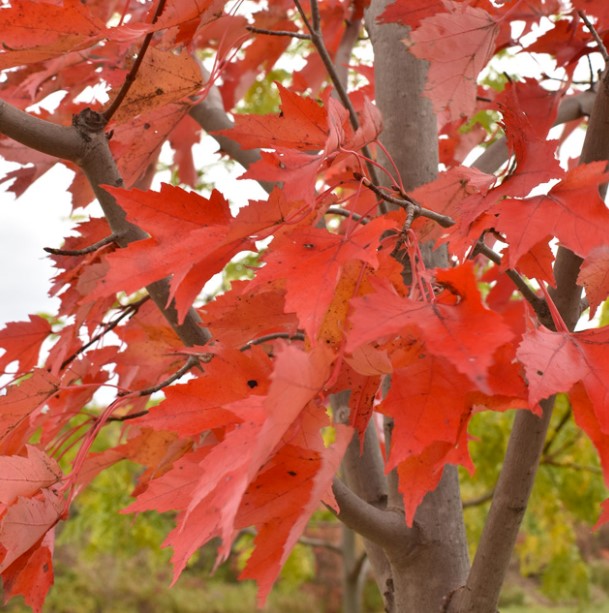
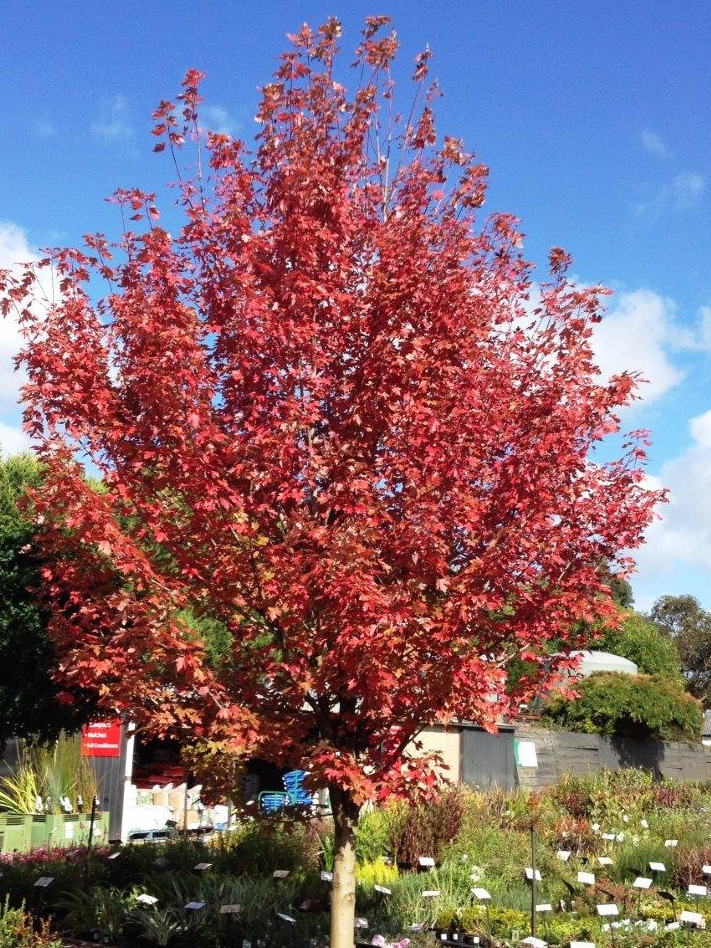
Vibrant, fiery red leaves and a large canopy make this Red Maple a very popular feature tree. The Maple Jeffersred is also known as Autumn Blaze.
Acer × freemanii ‘Jeffersred’, commonly known as Autumn Blaze Maple, is a hybrid maple tree that combines the best traits of its parent species, Acer rubrum (red maple) and Acer saccharinum (silver maple). This tree is prized for its rapid growth, stunning autumn color, and adaptability to various growing conditions.
Key Features:
- Size: It is a fast-growing deciduous tree, typically reaching heights of 15–25 meters (50–80 feet) with a spread of 12–15 meters (40–50 feet). Its upright, oval to rounded canopy gives it an attractive shape.
- Foliage: The leaves are deeply lobed, resembling those of both parent species. During the growing season, the foliage is a lush green, and in autumn, it turns brilliant shades of orange-red to crimson.
- Growth Rate: Known for its rapid growth, it can grow up to 1 meter (3 feet) per year under optimal conditions.
- Flowers: Like most maples, it produces inconspicuous red flowers in early spring before the leaves emerge.
Cultivation:
- Light: Thrives in full sun but can tolerate light shade.
- Soil: Adaptable to a range of soil types, including clay, loam, and sandy soils. Prefers well-drained soil but tolerates occasional waterlogging.
- Watering: Requires moderate watering when young. Once established, it is drought-tolerant.
- Climate: Hardy, making it suitable for a wide range of climates.
Advantages:
- Autumn Color: One of the most vibrant and consistent autumn color displays of any maple.
- Low Maintenance: Requires little pruning to maintain its shape and is resistant to pests and diseases.
- Versatility: Ideal for urban environments, parks, streetscapes, and large residential landscapes.
- Hybrid Vigour: Combines the strong wood and brilliant autumn colors of the red maple with the rapid growth and tolerance to adverse conditions of the silver maple.
Considerations for Maple Tree Jeffersred:
- Although it is relatively low-maintenance, the tree’s rapid growth can make it prone to developing weak branch unions, especially in high wind areas. Regular pruning when young can help develop a strong structure.