
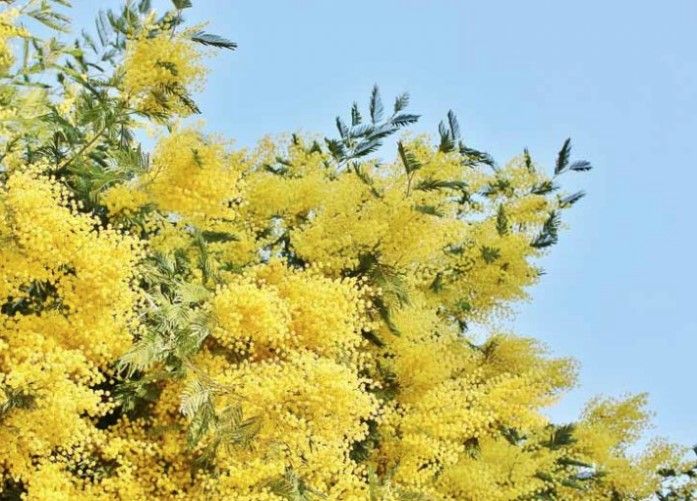
Acacia dealbata Silver Wattle
Acacia dealbata, commonly known as silver wattle or mimosa, is a fast-growing evergreen tree native to southeastern Australia, including Tasmania. It is widely cultivated for its ornamental value, fragrance, and ability to improve soil quality.
Key Characteristics:
- Family: Fabaceae
- Height: Typically grows between 6–30 meters (20–100 feet) tall.
- Leaves: Bipinnate, feathery, and covered in fine silvery hairs, giving them a soft appearance.
- Flowers: Bright yellow, fluffy, and spherical, blooming in late winter to early spring. Highly fragrant.
- Fruit: Flattened pods containing small black seeds.
- Bark: Smooth when young but becomes rough and fissured with age.
Uses:
- Ornamental: Often planted in gardens and parks due to its attractive foliage and flowers.
- Perfume Industry: Flowers are used in the production of essential oils.
- Soil Improvement: Fixes nitrogen, making it useful in reforestation and soil stabilization.
- Timber & Crafting: Wood is used for furniture, flooring, and decorative purposes.
- Dye Production: Bark and wood yield tannins for dyeing and leather tanning.
Cultivation & Care:
- Climate: Prefers warm, temperate climates but can tolerate mild frost.
- Soil: Well-drained soils, tolerates poor or sandy soils.
- Sunlight: Thrives in full sun.
- Watering: Drought-tolerant once established but benefits from occasional watering in dry periods.
- Pruning: Can be pruned to maintain shape and control growth.
Invasiveness & Ecological Impact:
In some regions, such as parts of South Africa, New Zealand, and southern Europe, Acacia dealbata has become an invasive species, spreading aggressively and outcompeting native vegetation.