
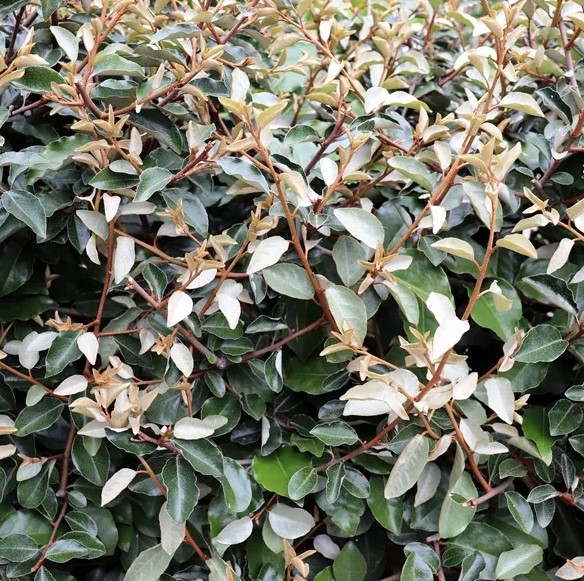
Ebbings Silverberry is a fast-growing evergreen shrub with dense grey-green foliage and small fragrant white flowers during Autumn and Winter.
Elaeagnus × ebbingei is commonly used for hedging, screening, and ornamental purposes. It is known for its silvery-green foliage, fragrant autumn flowers, and resilience to coastal and urban conditions.
Key Features of Ebbings Silverberry:
- Common Name: Ebbing’s Silverberry, Oleaster
- Foliage: Broad, leathery green leaves with a silvery underside, providing a beautiful contrast
- Flowers: Small, creamy-white, highly fragrant flowers appear in autumn (Sept-Nov)
- Fruit: Small, edible orange-red berries (appear in spring) attract birds
- Height & Spread: Grows 3-5m (10-16 ft) tall and wide if left unpruned
- Growth Rate: Fast-growing, up to 30-50 cm per year
- Sun Requirements: Tolerates full sun to partial shade
- Soil Preferences: Well-draining soil; adaptable to most soil types, including poor, sandy, or dry soils
- Drought Tolerance: Highly drought-resistant once established
- Wind & Salt Tolerance: Excellent choice for coastal gardens, windbreaks, and urban planting
- Wildlife Benefits: Pollinator-friendly (flowers attract bees), berries provide food for birds
Uses in Landscaping:
- Hedging & Screening: Dense, evergreen foliage makes it perfect for privacy screens and windbreaks
- Specimen Plant: Works well as a standalone ornamental shrub
- Coastal & Urban Gardens: Tolerant of pollution, wind, and salt spray
- Topiary & Pruning: Can be pruned into formal shapes or left for a more natural look
Ebbings Silverberry Care Tips:
- Pruning: Best pruned in late winter or early spring to maintain shape
- Watering: Water well until established, then it is highly drought-tolerant
- Fertilization: Not required frequently, but an occasional feed in spring can encourage growth
- Pest & Disease Resistance: Generally trouble-free, but watch for occasional scale insects or leaf spot