
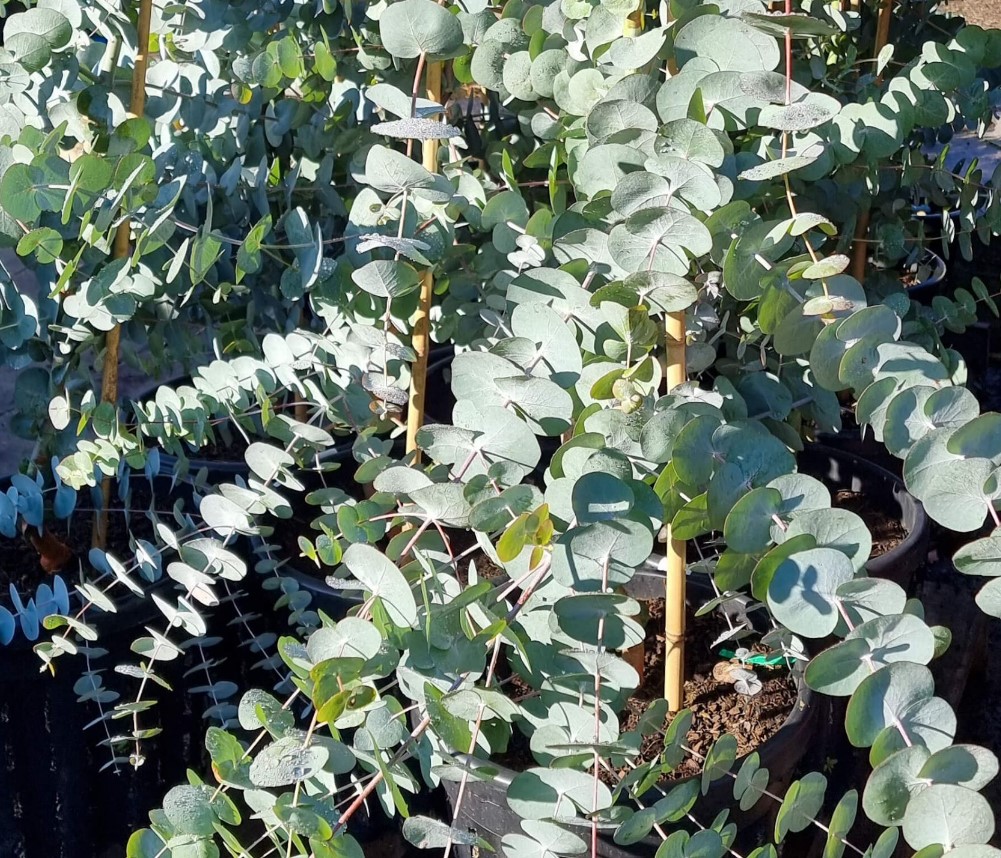
The ultimate Eucalyptus feature gum for modern Australian gardens
Eucalyptus cinerea, commonly known as Silver Dollar Gum or Argyle Apple, is a striking evergreen tree native to Australia. It is highly valued for its round, silver-blue leaves, aromatic foliage, and adaptability. Often used as a landscape tree or in floral arrangements, this eucalyptus variety adds a distinctive aesthetic to gardens and designs.
Key Features:
Appearance:
- Foliage: Juvenile leaves are round, silvery-blue, and waxy, giving the tree its “silver dollar” name. Mature leaves are elongated and maintain a bluish tint.
- Height and Spread: Typically grows to 10–15 meters (30–50 feet) tall and about 8–10 meters (25–33 feet) wide, but can be pruned to stay smaller.
- Bark: Smooth, mottled bark that sheds in patches, revealing a cream or greyish trunk.
- Flowers: Produces clusters of creamy white flowers in late spring to summer, attracting bees and pollinators.
Growing Conditions:
Light Requirements:
- Prefers full sun, thriving in bright, open spaces.
Soil:
- Grows well in a variety of soils, including sandy, loamy, and clay soils.
- Prefers well-draining soil but is tolerant of poor and slightly compacted soils.
Watering:
- Drought-tolerant once established but benefits from occasional watering during prolonged dry periods.
- Requires regular watering during the establishment phase (first 1–2 years).
Hardiness:
- It tolerates frost and can withstand temperatures as low as -8°C (18°F).
Advantages:
- Decorative Foliage: The silvery-blue, aromatic leaves are visually striking and popular in floral arrangements.
- Drought-Tolerant: Thrives in dry conditions once established.
- Low Maintenance: Requires minimal care and pruning.
- Wildlife-Friendly: Attracts pollinators like bees and provides habitat for birds.
- Fast-Growing: Provides quick shade or screening in landscapes.
Care Tips:
- Pruning:
- Prune regularly when young to shape the tree and encourage a compact, bushy form, especially if grown for its ornamental foliage.
- Remove dead or damaged branches in late winter or early spring.
- Fertilizing:
- Generally not required, but applying a slow-release fertilizer in spring can support growth in poor soils.
- Mulching:
- Add a layer of mulch around the base to retain soil moisture and suppress weeds.
- Pest and Disease Management:
- Typically pest-free, though occasional issues with scale or psyllids may arise. Treat infestations with insecticidal soap or neem oil.
Uses in Landscaping:
- Ornamental Tree: A striking focal point in gardens due to its unique foliage and form.
- Hedging or Screening: Can be planted in rows and maintained as a dense hedge for privacy.
- Cut Foliage: Widely used in floral arrangements for its long-lasting, aromatic leaves.
- Wildlife Gardens: Supports pollinators and provides shelter for native birds.
- Drought-Tolerant Gardens: Perfect for xeriscaping or dry-climate landscaping.
Companion Plants:
- Grasses: Pair with ornamental grasses like Miscanthus or Pennisetum for a contrasting texture.
- Native Plants: Combine with Australian natives like Grevillea or Callistemon (Bottlebrush) for a cohesive look.
- Flowering Perennials: Pair with lavender or salvias to enhance its silvery foliage with pops of color.
Potential Issues:
- Leaf Drop:
- Some leaf shedding is natural, especially during dry spells. Ensure consistent watering during establishment.
- Frost Damage:
- While frost-tolerant, young trees may require protection during harsh winters.
- Invasive Roots:
- Like many eucalyptus trees, it has an extensive root system, so avoid planting too close to buildings, pipes, or paved areas.
Fast growing native Eucalyptus with year-round visual impact
- The aromatic leaves of Eucalyptus cinerea contain essential oils that are used in traditional medicine and aromatherapy.
- The juvenile foliage, with its unique round shape and silvery hue, is particularly prized in flower arrangements.
- It is often used in erosion control due to its fast growth and ability to stabilize soils.