
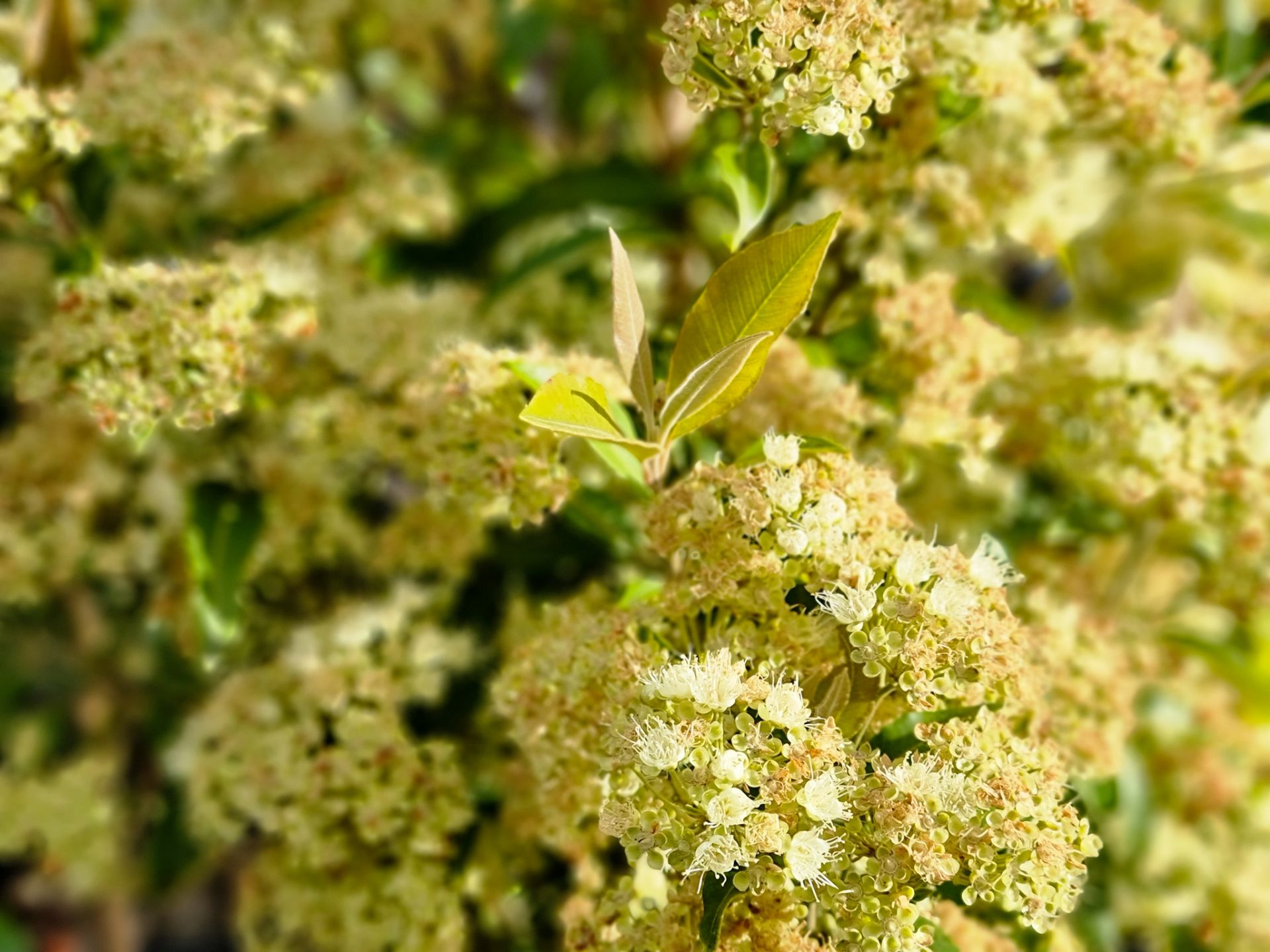
Backhousia citriodora, commonly known as Lemon Scented Myrtle, is a species of flowering plant native to northeastern Queensland, Australia. This plant is renowned for its aromatic, lemon-scented leaves, which are used for culinary and medicinal purposes, as well as in essential oil production.
Key Characteristics:
- Family: Myrtaceae
- Common Name: Lemon Myrtle
- Appearance: Backhousia citriodora is an evergreen shrub or small tree, typically growing to a height of 3–4 meters. It has glossy, dark green leaves that emit a strong lemon fragrance when crushed.
- Flowers: The plant produces creamy white, fragrant flowers that appear in clusters during the summer months.
- Leaves: The leaves are elongated and narrow, with a smooth, shiny texture. Their intense citrus aroma comes from high levels of citral, which gives them their lemony scent.
Uses:
- Culinary: The leaves are often used in cooking to impart a strong lemon flavor. They can be used fresh or dried in dishes such as sauces, teas, and desserts.
- Essential Oils: The plant is well-known for its essential oil, which is extracted from the leaves. Lemon Myrtle essential oil is used in aromatherapy and has applications in skin care due to its antibacterial and antifungal properties.
- Medicinal: In traditional Australian Indigenous medicine, Lemon Myrtle has been used for its antimicrobial and anti-inflammatory properties.
Growing Conditions:
- Climate: It thrives in subtropical and tropical climates, preferring well-drained soils and full sunlight.
- Watering: It is moderately drought-tolerant but grows best with consistent moisture.
Lemon Myrtle is appreciated for its versatile uses, both in the kitchen and in the wellness industry. It’s also grown in ornamental gardens for its fragrant foliage and attractive flowers