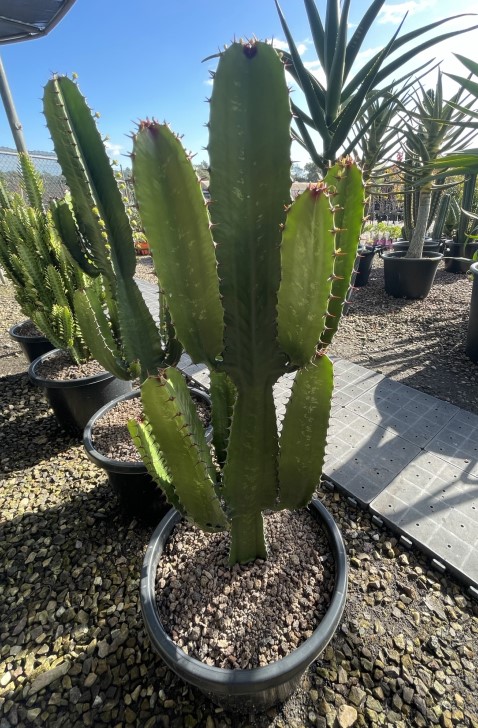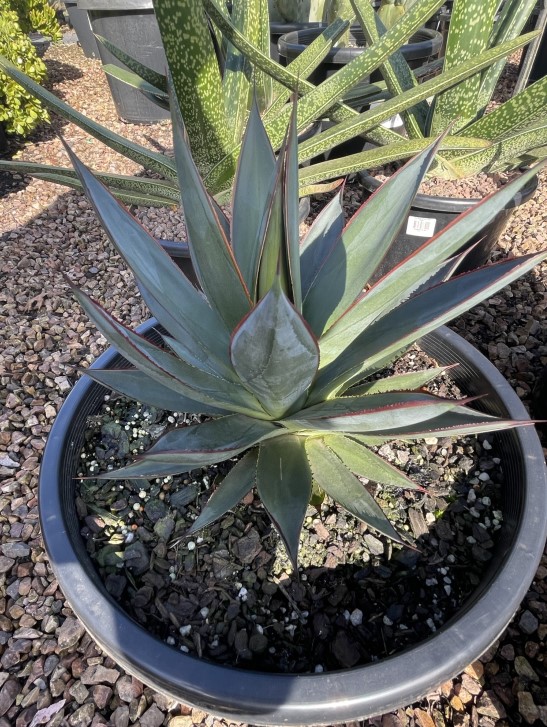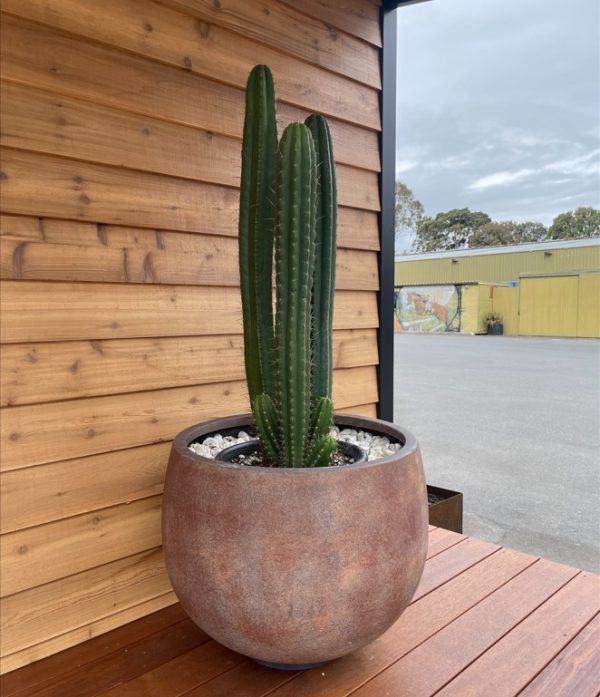
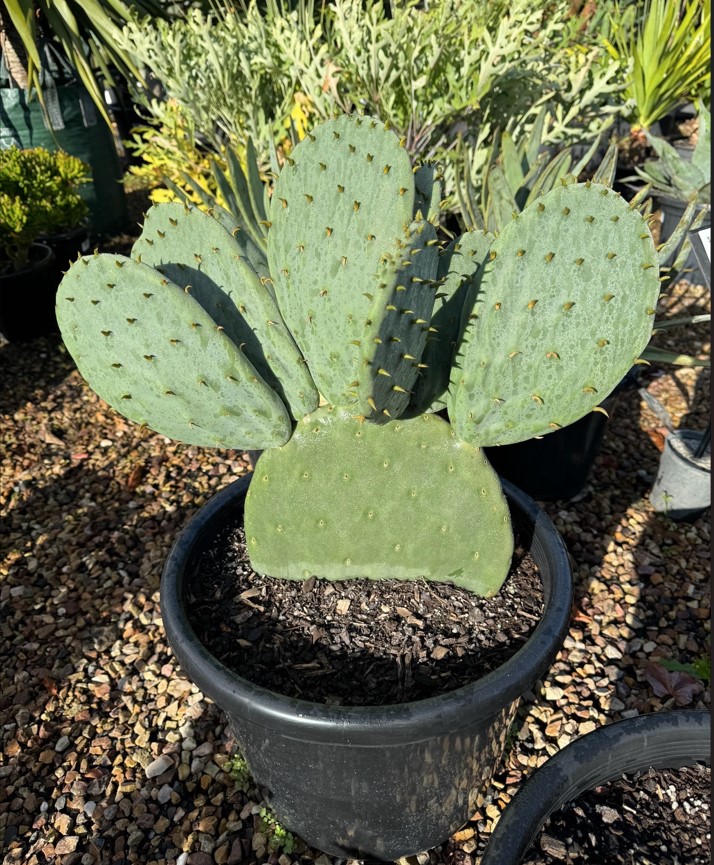
The Prickly Pear Cactus is an upright cactus with smooth, spineless paddle-shaped green segments. Summer flowers are followed by edible fruits commonly known as prickly pears. Grows to approx. 3m
Opuntia ficus-indica ‘Burbank Spineless’, commonly known as the Burbank Spineless Prickly Pear, is a cultivar of the Prickly Pear Cactus (Opuntia ficus-indica). It is valued for its lack of spines, making it easier to handle, and its edible pads and fruits. Here’s a complete guide:
Description
- Foliage:
- Flattened, oval-shaped pads (cladodes) with a smooth, spineless surface, though tiny glochids (hair-like spines) may still be present and require care.
- The pads are green and store water, making the plant highly drought-tolerant.
- Flowers: Produces large, showy, yellow or orange flowers in late spring to early summer.
- Fruits:
- The plant bears edible fruits, commonly known as tunas, which are sweet and juicy with a reddish or orange skin.
- The fruit is typically harvested in late summer or early Autumn.
- Growth Habit: A perennial, clump-forming cactus that can grow up to 10–15 feet (3–4.5 meters) tall and wide under ideal conditions.
Habitat and Growth
- Native Range: Native to Mexico and widely cultivated in arid and semi-arid regions worldwide.
- Light: Thrives in full sun and requires at least 6–8 hours of direct sunlight daily.
- Soil: Prefers well-drained, sandy, or rocky soils. It tolerates poor, nutrient-deficient soils but does not thrive in waterlogged conditions.
- Hardiness: It can withstand light frost but requires protection in prolonged freezing conditions.
Uses
- Edible Crop:
- Pads (Nopales): The tender young pads are edible and commonly used in Mexican cuisine, either grilled, sautéed, or added to salads.
- Fruits (Tunas): The fruits are eaten fresh, juiced, or used in jams, desserts, and beverages.
- Ornamental: Adds a dramatic and architectural look to xeriscapes, desert gardens, or Mediterranean-style landscapes.
- Forage: Used as animal fodder in arid regions due to its high water content and nutritional value.
- Erosion Control: Its roots help stabilize soil on slopes and prevent erosion in arid landscapes.
Care Tips
- Watering:
- Water sparingly. Allow the soil to dry out completely between waterings.
- Once established, it is extremely drought-tolerant and requires little to no supplemental irrigation.
- Fertilizing:
- Apply a balanced, low-nitrogen fertilizer in spring if growth is slow or the plant is being cultivated for fruit production.
- Pruning:
- Remove dead or damaged pads to maintain shape and health.
- Use gloves when handling to avoid irritation from tiny glochids.
- Pests/Diseases:
- Susceptible to cochineal scale insects, which appear as white, cottony masses on the pads. Control by spraying with water or insecticidal soap.
- Root rot may occur if planted in poorly drained soil.
Advantages of ‘Burbank Spineless’
- Ease of Handling: The lack of large spines makes it safer and easier to work with compared to traditional prickly pears.
- Multi-Purpose Plant: Offers ornamental beauty, edible pads and fruits, and ecological benefits like erosion control.
- Hardiness: Thrives in harsh conditions, including heat, drought, and poor soils.
Fun Facts
- Developed by Luther Burbank: The cultivar was bred by the famous horticulturist Luther Burbank in the early 20th century to be more user-friendly.
- Nutritional Value: Both the pads and fruits are rich in vitamins, antioxidants, and dietary fiber.
- Cultural Significance: Opuntia ficus-indica is a staple in Mexican cuisine and an important cultural symbol in Mexico, where it appears on the national coat of arms.